Social




As Canada looks to strengthen its economy and expand its role in global energy markets, observers point to a clear opportunity: increasing oil export capacity to the Pacific coast.
A growing body of evidence suggests that a new West Coast oil pipeline would deliver significant benefits, simultaneously diversifying market access, driving economic growth and building Indigenous partnerships.
Through Alberta’s agreement with the federal government, the proposed new pipeline would also support lower-emissions oil production by helping advance one of the world’s largest new carbon capture and storage (CCS) networks and other emissions-reducing technologies.
Here are the top five reasons why building a new oil pipeline to the coast of British Columbia is in the interest of all Canadians:
1. Strengthening Canada’s economic independence
Canada is already in the top tier of global energy markets as the world’s third-largest oil exporter and fourth-largest holder of oil reserves.
Oil and gas is by far Canada’s largest export, valued at $182 billion in 2025 — one-quarter of the country’s total exports, according to Natural Resources Canada.
More than 520,000 people across the country benefit from jobs directly or indirectly supported by the oil and gas sector.
But there’s a catch: Canada’s oil and gas exports have historically gone almost exclusively to one destination — the United States.
A new pipeline to the West Coast would reduce this reliance by significantly expanding access to global markets, especially in Asia, where demand is projected to keep growing for decades.
The Trans Mountain Expansion, completed in 2024, shows the opportunity.
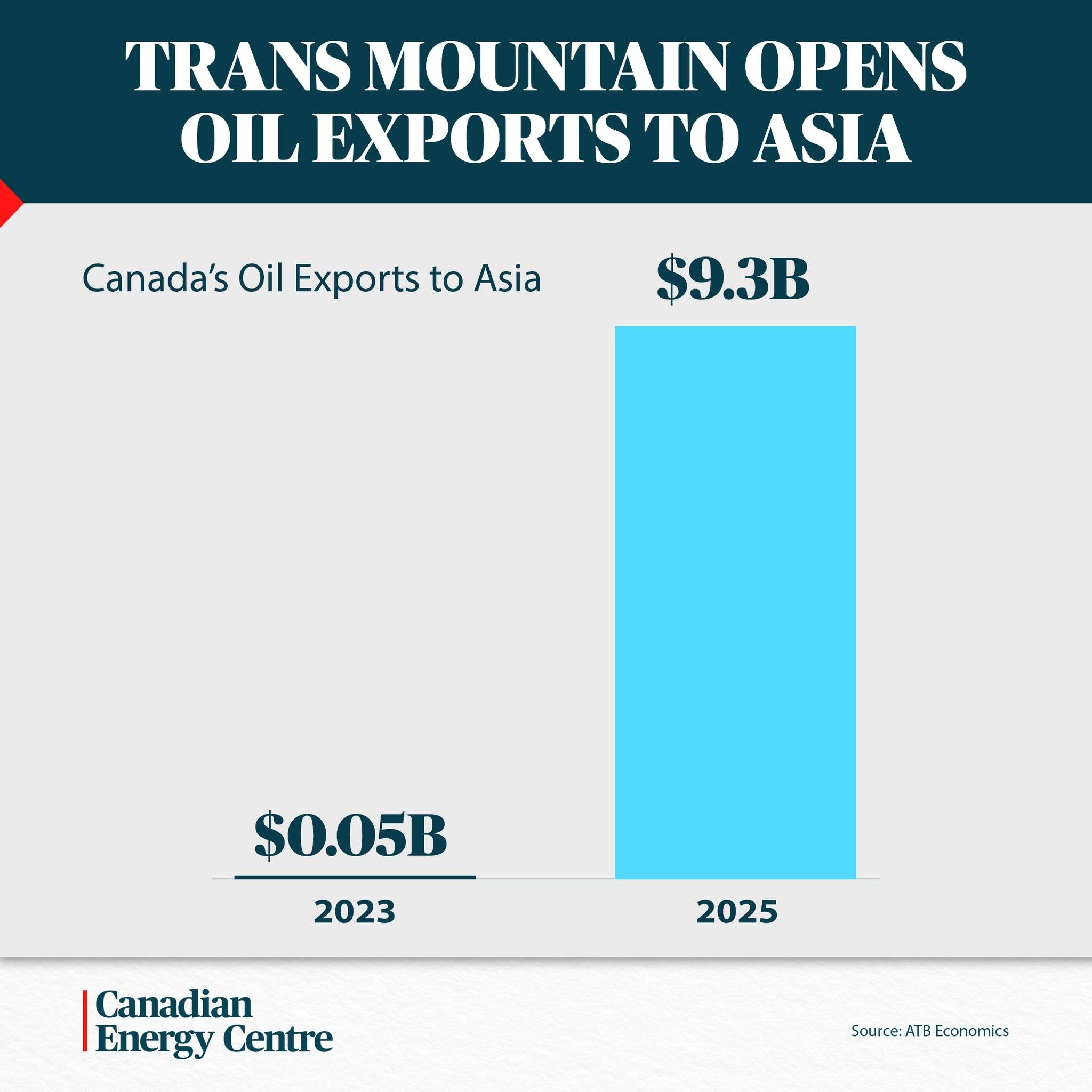
Before it came online, Canada sold $500 million of oil to Asia in 2023. In 2025, exports jumped more than 1,700 per cent to $9.3 billion, according to ATB Economics.
And the growth is continuing. Since January, Alberta’s oil exports to South Korea have surged 227 per cent, ATB reports.
“Energy is the oxygen of economies. It underpins everything we do and the standard of living we expect,” said Denise Mullen, director of environment, sustainability and Indigenous relations for the Business Council of British Columbia.
“When energy systems are connected to markets, they enable trade, which is essential for small, open, and trade dependent economies like B.C. and Canada.
“A new pipeline to the West Coast is clearly in Canada’s national interest.”

It’s also in the interest of Canada’s allies, a point G7 leaders reinforced in a joint statement following their June meeting in Évian, France.
After committing to move faster to diversify energy supply routes in order to reduce global vulnerability to the Strait of Hormuz, leaders said they “welcome the potential for Canada to deliver significant additional capacity to global markets in the coming years.”
2. A big boost to the national economy, jobs and government revenues
Economic modelling shows a new West Coast oil pipeline, and the expanded oil production to fill it, would deliver substantial benefits for Canadians.
A joint analysis by ATB Economics and Studio.Energy found that growing oil production and exports by 1.5 million barrels per day could boost Canadian economic activity, or GDP, by about $31 billion per year over the next decade.
“Economies grow stronger by investing in productive capacity and expanding exports,” wrote Studio.Energy CEO Peter Tertzakian and ATB Financial chief economist Mark Parsons.
“Exports generate long-term income for government treasuries and sustain high-paying jobs.”
Alberta’s government projects that building the pipeline could support about 140,000 jobs at its peak in the early 2030s. Once in service, the project could support about 50,000 jobs per year, including 7,500 outside the province.
Governments would benefit from increased taxes, royalties and other payments related to the project, helping fund critical services such as roads, schools and hospitals.
Initial estimates suggest the pipeline could generate about $68 million in property taxes alone for local governments along the route, with that amount increasing significantly over the project’s lifetime.
3. Growing Indigenous partnerships
The proposed West Coast oil pipeline would build on one of the biggest trends in Canada’s resource sector: growing Indigenous investment in major energy projects.
The Canada Energy Regulator reports that Indigenous communities now have ownership interests in more than 5,000 kilometres of pipelines, primarily in Alberta and B.C.
These investments create long-term income while supporting Indigenous communities in building experience as owners, investors and project partners.
It’s a model that is reshaping how Indigenous communities build wealth, plan for the future and strengthen economic self-determination.
In northern Alberta, Peerless Trout First Nation has used energy ownership revenue to invest in education, emergency preparedness and an upgraded outdoor hockey rink.

The revenue is helping the Nation plan for long-term growth, including a proposed fishing lodge and resort that would create local jobs and diversify its economy.
Willow Lake Métis Nation is taking a similar approach, using energy ownership revenue to buy land and build a working bison ranch, greenhouse and small farm that support food security, cultural renewal and local jobs.
With support from financing tools like the Alberta Indigenous Opportunities Corporation (AIOC), the proposed West Coast oil pipeline includes a formal commitment to Indigenous partnership from the start, ensuring Indigenous communities have a seat at the table from the beginning.
“There’s a balance of creating economic development and protecting the environment. It takes discussion and relationships. It is a lot of work, especially at the grassroots level,” said Stephen Buffalo, AIOC chair and president of the Indian Resource Council.
“I hope we can find that space so we can get this project done right. This is not only big for our people, it’s big for Canada, so it’s got to work.”
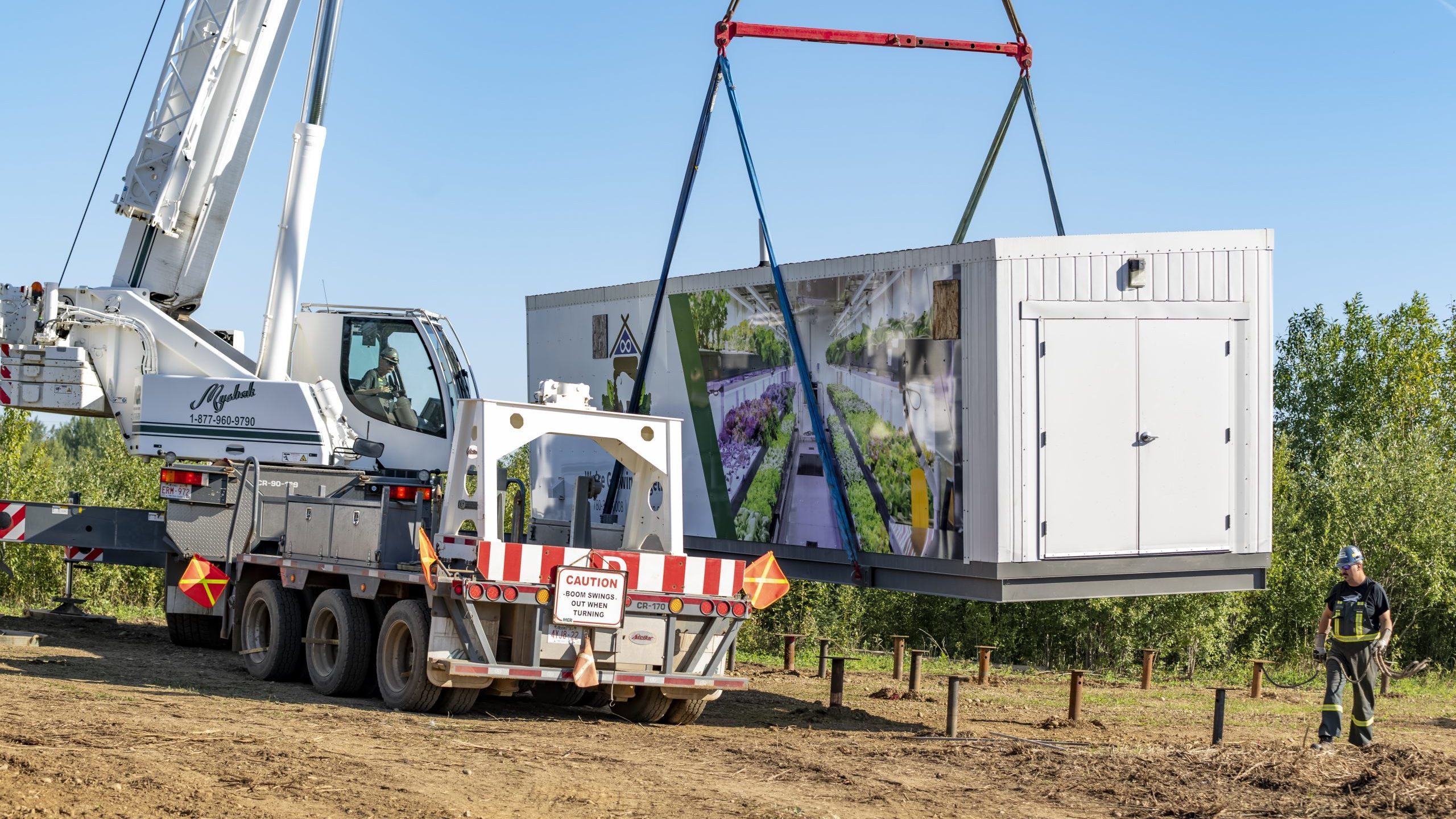
A new pipeline to the West Coast would offer enormous opportunities for Indigenous communities, said Dale Swampy, president of the National Coalition of Chiefs.
“It is in the national interest of Canada both for energy security and trade diversification, but also to bring our First Nations people out of poverty through partnerships with Canada’s largest natural resource industry: our oilsands industry,” he said.
“In addition to receiving hundreds of millions of dollars in profits over 30 years as owners, the Indigenous communities will also have hands-on control in the monitoring of the pipeline as owners.”
4. Strong foundations for safety and successful project delivery
In a 2025 University of Ottawa/Nanos Research survey, Canadians were asked which sector has the greatest potential to help double Canada’s exports to non-U.S. markets over the next decade. Energy ranked first.
A key question is whether Canada can build the infrastructure needed to reach those markets. Meeting the physical challenge of building pipelines across the Rocky Mountains has already been proven, most recently with the completion of the Trans Mountain Expansion and Coastal GasLink systems.
On average, 99.999 per cent of oil transported through federally regulated pipelines safely reaches its destination. There have been no major spills in nearly a decade, and even small incidents are uncommon.
In 2024, pipelines averaged fewer than one safety incident for every 1,000 kilometres — less than one incident over a distance longer than Calgary to Vancouver — according to the Transportation Safety Board.
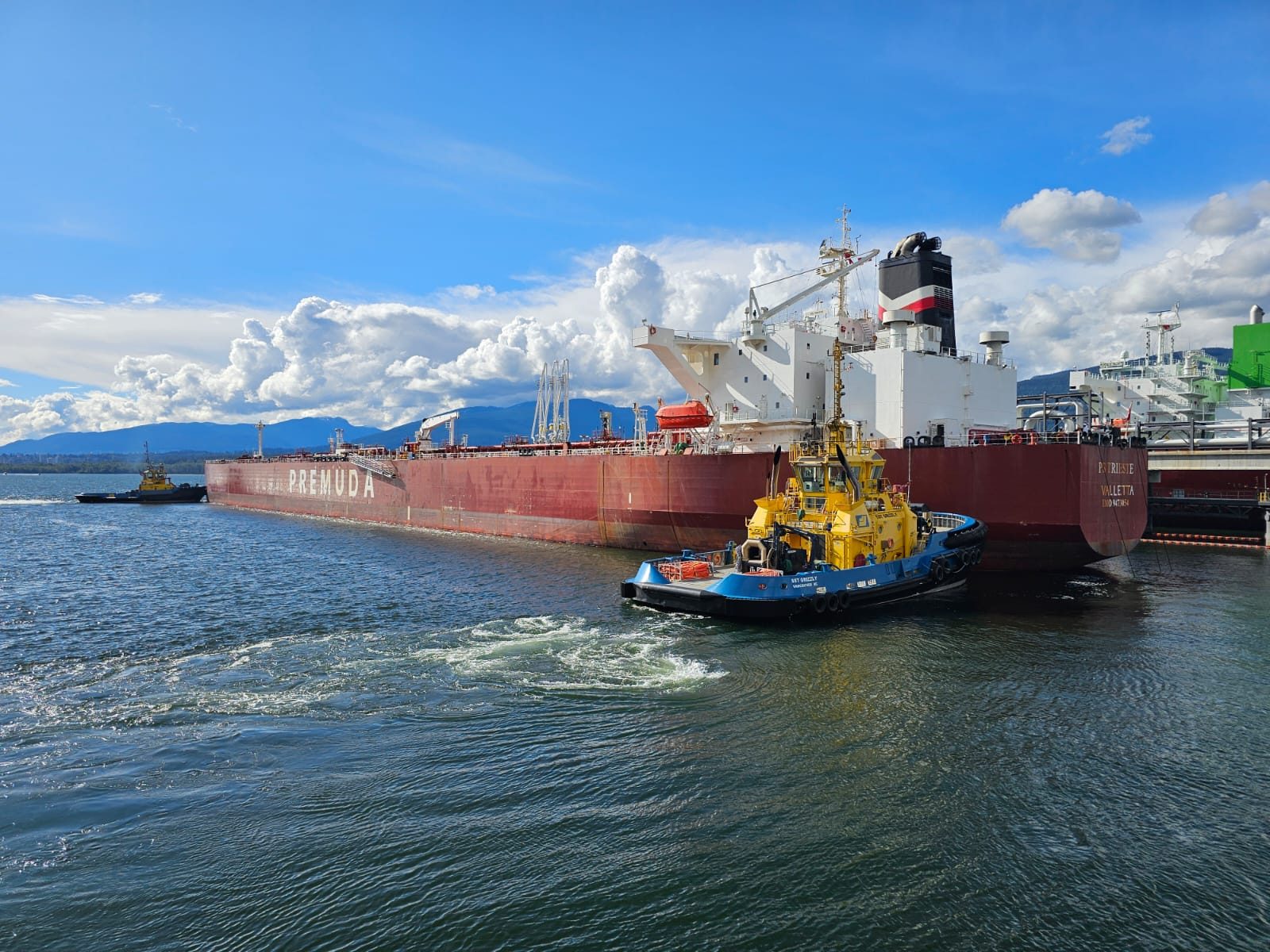
Meanwhile, there hasn’t been an oil tanker spill in B.C. waters in more than 50 years, even as traffic has increased.
“Canada has a long history of building large pipelines through challenging terrain,” said Joe Calnan, vice-president of energy for the Canadian Global Affairs Institute.
“The fundamental engineering challenges are well within the realm of possibility if paired with the correct combination of political will and capital discipline.”
Major Canadian pipeline companies, led by Trans Mountain, helped develop Alberta’s proposal, which was filed with the federal Major Projects Office this July.
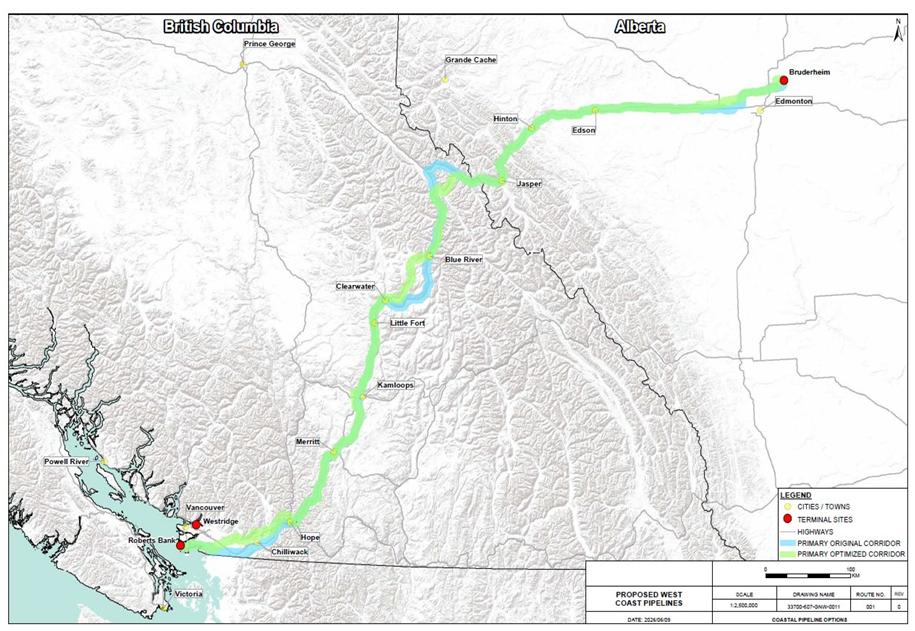
The 1,200-kilometre project would use the existing Trans Mountain corridor starting near Edmonton, ending in a new terminal at Robert’s Bank, in the Port of Vancouver.
Going forward, project partner Trans Mountain will lead design, permitting, construction and operation. Meanwhile Pembina Pipeline, another project partner, will act as a strategic advisor.
Alberta’s agreement with the federal government lays out a process for advancing the proposed pipeline, including a commitment to designate the project as being in the national interest under the Building Canada Act by October 1 and to issue regulatory approval by September 1, 2027, subject to sufficient consultation with Indigenous communities and several other conditions.
Lawyers with the firm Osler say this approach provides an “unprecedented degree of early political and regulatory alignment” between the federal and provincial governments.
“In our view, this level of political support was crucial for any new oil pipeline to the West Coast to succeed, and the agreement offers real promise that this project may come to fruition,” they wrote in May.
5. Supporting emissions reduction
Per the federal-provincial agreement, finalized in July, the new pipeline would boost Canada’s oil exports to international markets while reducing oil sands emissions through the Pathways CCS project and other technologies.
This would accelerate the sector’s success reducing emissions per barrel, which declined by 26 per cent between 2012 and 2023, even as production increased.
Alberta’s government, the federal government, and the five companies in the Oil Sands Alliance have agreed to reduce oil sands emissions by 16 million tonnes per year by 2045.
This includes about six million tonnes annually from the Pathways project, targeted for operations in 2035, while other emissions-reducing technologies deliver another five million tonnes by 2040 and a further five million tonnes by 2045.
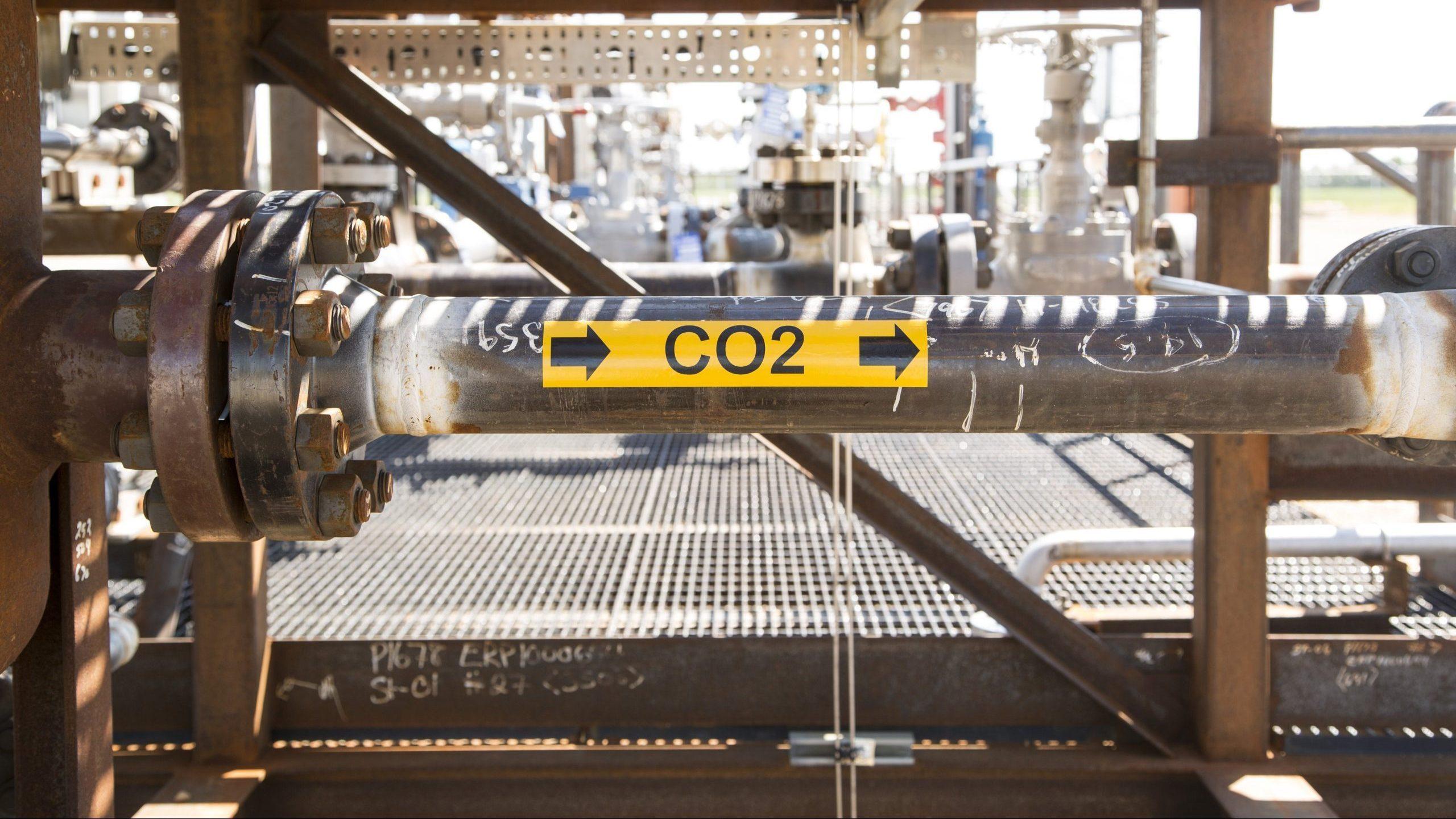
To help advance these projects, federal tax credits covering up to 50 per cent of eligible carbon capture equipment costs and 37.5 per cent of transportation and storage costs have been extended to 2035.
Alberta will also extend to 2035 grants covering 12 per cent of eligible new carbon capture costs.
Companies that meet key milestones will also see a smaller annual increase in their required emissions reductions under Alberta’s TIER system, dropping from two per cent to one per cent starting in 2029.
The companies will make reasonable efforts to use Canadian steel, aluminum, technologies and suppliers in their emissions reduction projects, with binding agreements targeted by November 15, 2026.
“If we get it right, we can drive decarbonization and address global energy security,” said ATB’s Parsons.
The unaltered reproduction of this content is free of charge with attribution to the Canadian Energy Centre.