
Social




The federal government is following through on a key element of its energy accord with Alberta.
In its spring economic update, Ottawa confirmed plans to extend the carbon capture, utilization and storage (CCUS) investment tax credit to projects that include enhanced oil recovery (EOR).
EOR projects were notably excluded from Ottawa’s CCUS investment tax credit when it was rolled out in 2024.
“We were always puzzled; we were always concerned that EOR was removed from the conversation,” Mark Scholz, president of the Canadian Association of Energy Contractors, told reporters at the group’s December state of the industry luncheon.
“I mean, EOR is a game changer for the conventional business.”
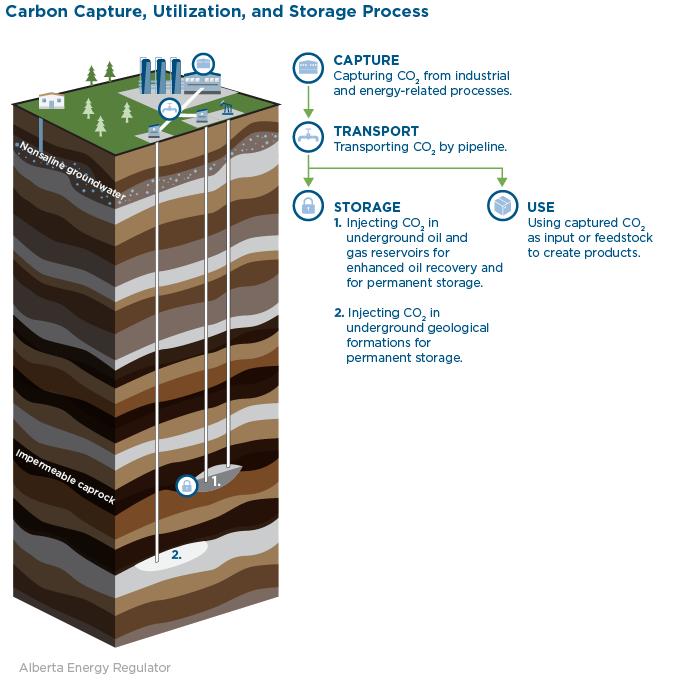
Enhanced oil recovery involves injecting CO₂ captured from industrial sources deep underground into mature oil reservoirs to help increase production.
The CO₂ helps oil flow more easily out of the porous rock, making it more efficient to extract, while the injected CO₂ remains trapped underground. This process can extend the life of existing oil production while also enabling large-scale storage of greenhouse gases.
Six of Canada’s eight operating commercial-scale CCUS projects involve using captured carbon for EOR.
One example is the Weyburn-Midale project, which since 2000 has safely stored CO₂ equivalent to the annual emissions of more than 9.5 million cars—exceeding the total number of gasoline-powered light-duty vehicles in Ontario.
Having produced more than 600 million barrels of oil, Weyburn is one of the world’s longest-running CO₂ EOR projects. It still has decades of remaining potential, executives with owner Whitecap Resources said at the company’s investor day in January 2026.
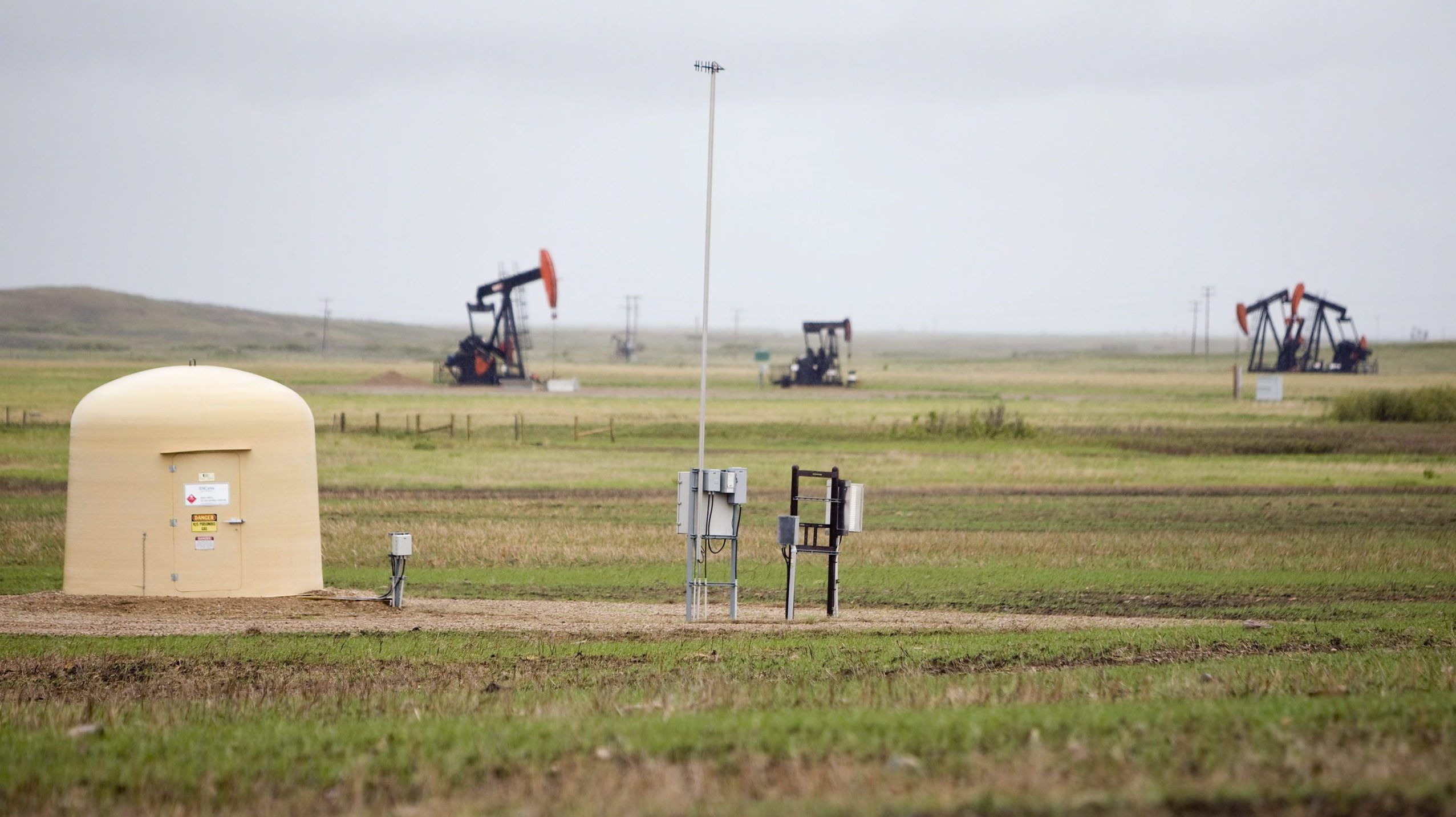
In Alberta, Enhance Energy’s Clive sequestration project near Red Deer permanently stores more than 1.5 million tonnes of CO₂ each year while producing oil through EOR.
The project helps reduce emissions from Alberta’s large industries while making use of existing infrastructure and addressing legacy liabilities from past oil and gas operations, said Enhance Energy vice-president Candice Paton.
“The inclusion of EOR in the CCUS ITC as a permanent geological storage option for industrial CO2 allows companies like Enhance to continue having a positive impact in both emissions reductions and energy production by repurposing existing assets,” she said.
Excluding enhanced oil recovery from federal investment incentives never made sense, lawyers Scott Masson and Tom Collopy of MLT Aikins’ energy group wrote in an analysis prior to the Canada-Alberta agreement.
“EOR is not a novel technology in Canada. These facilities, such as the Boundary Dam Power Station in Estevan, Saskatchewan, demonstrate that EOR is a natural extension of CCUS operations,” they wrote.
Including EOR in the investment tax credit would make the technology more financially viable for energy producers.
As a result, “Canada can simultaneously advance its environmental goals and economic interests,” they wrote.
Along with existing regimes in Alberta and Saskatchewan, this will encourage more producers to consider using CO2-EOR to extend the value of mature assets, Masson told CEC.
“This significantly changes the economics of a project,” he said.
“When you are looking at CCUS projects, the incentive structures required to build them are important. We’re seeing a lot of projects in the CCUS space hovering around this final investment decision,” Masson said.
“A lot of organizations have had problems getting projects across the line, and this change helps remove a sticking point that a lot of our clients in this space have had when it comes to CCUS.”
Calgary-based Conifer Energy welcomed the expansion of Canada’s CCUS framework to include EOR, saying it will help enable the long-term investment needed to advance major decarbonization infrastructure.
The company said access to the federal tax credit “materially improves” the economics of its future Alberta projects, which will permanently store CO₂ while supporting jobs and generating government royalties.
The unaltered reproduction of this content is free of charge with attribution to the Canadian Energy Centre.