Social




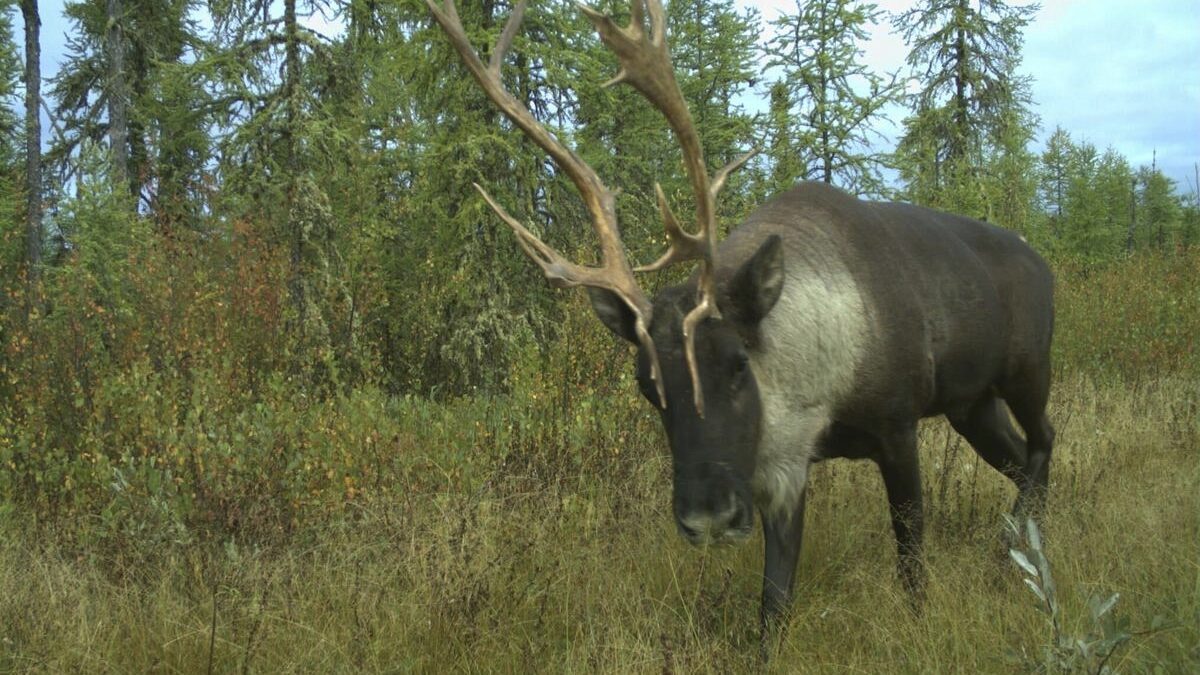
Large-scale habitat restoration in Alberta is accelerating to support iconic caribou populations.
The focus is on legacy seismic lines — straight, flattened clearings cut through the boreal forest decades ago for oil and gas exploration, often up to eight metres wide to accommodate large equipment.
While today’s oil and gas operators no longer use these methods, the forest in many areas has struggled to regenerate on its own.
Now, it’s got some help.
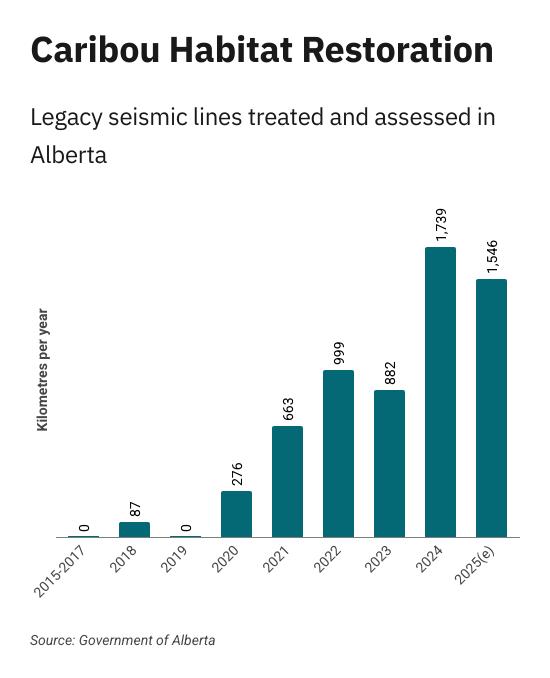
Revegetation of legacy seismic lines has increased by nearly 7,000 per cent since 2019, according to new data from Alberta Environment and Parks.
More than 6,100 kilometres have been treated since the launch of Alberta’s Caribou Habitat Recovery Program, compared to just 87 kilometres between 2015 and 2019.
“What’s been done in the past five years with the resources and exposure committed to recovering these disturbances is impressive progress,” said Jesse Tigner, a Pincher Creek, Alta.-based ecologist who has both researched and restored seismic lines through his company SwampDonkey Solutions.
The record pace is set to continue, with the province announcing agreements with two major energy companies to invest nearly $12 million in replanting legacy lines in caribou ranges where they operate.
Seismic lines and caribou
The first seismic survey in Alberta was carried out in 1929 to support development of the Turner Valley oilfield.
For most of the 20th century, seismic lines in the province were cut with heavy machinery to make room for large equipment that uses energy waves to map oil and gas deposits beneath the surface.
While many have not been used for decades, more than 200,000 kilometres of legacy seismic lines remain in Alberta’s caribou ranges.
Researchers have identified restoring these legacy lines as crucial to rebuilding habitat for the species.
That’s because the clearings have created pathways that make it easier for wolves to hunt caribou, which are considered threatened in Canada.
“Legacy lines allow wolves to move much further and faster than forests without lines,” Tigner said.
Used since the 1990s,. low-impact seismic lines are smaller and recover more effectively on their own, according to a study co-authored by Tigner in the Canadian Journal of Forest Research.
Industry investment builds momentum
Since 2019, more than $90 million has been invested in assessing and restoring legacy seismic lines under Alberta’s Caribou Habitat Recovery Program, the province says.
New agreements with TC Energy and Syncrude will add nearly $12 million.
Pipeline operator TC Energy will invest $5 million to restore legacy seismic lines in the Little Smoky caribou range in west-central Alberta, while oil sands producer Syncrude has committed $6.95 million to restoration in the Richardson range in the province’s northeast.
Tigner, who has worked on restoring legacy lines in both British Columbia and Alberta, sees industry participation as important in addressing the issue.
“Some oil sands companies have driven the work and have done a phenomenal job of restoring lines,” he said.
Oil sands-led projects drive restoration
The oil sands industry has invested in caribou habitat restoration for nearly two decades, said Kendall Dilling, president of the Oil Sands Alliance, which represents its five largest producers.
“Several projects led by industry have piloted the methods and techniques used to restore caribou habitat,” he said.
Examples include the Boreal Ecosystem Recovery and Assessment (BERA) project, Cenovus Energy’s Caribou Habitat Restoration Project and the Algar Seismic Restoration Pilot Project.
The ongoing BERA project brings together researchers, industry and government to study how industrial activity affects the boreal forest and how to restore disturbed landscapes.
Cenovus Energy’s $32-million, 10-year program, launched in 2016, restores legacy seismic lines to help protect threatened woodland caribou near its oil sands operations.
Recognized with an Alberta Emerald Award in 2024, the project has treated more than 100,000 hectares and planted 1.6 million trees, making it the largest of its kind globally.
Meanwhile, the Algar project, carried out between 2012 and 2015, restored seismic lines in caribou habitat southwest of Fort McMurray.
After restoration, researchers used 73 camera traps to monitor how caribou and other wildlife responded.
The unaltered reproduction of this content is free of charge with attribution to the Canadian Energy Centre.