Social




The Port of Vancouver has emerged as a lifeline for Asian oil refiners amid disruption of the vital shipping route through the Strait of Hormuz, according to ATB Cormark Capital Markets.
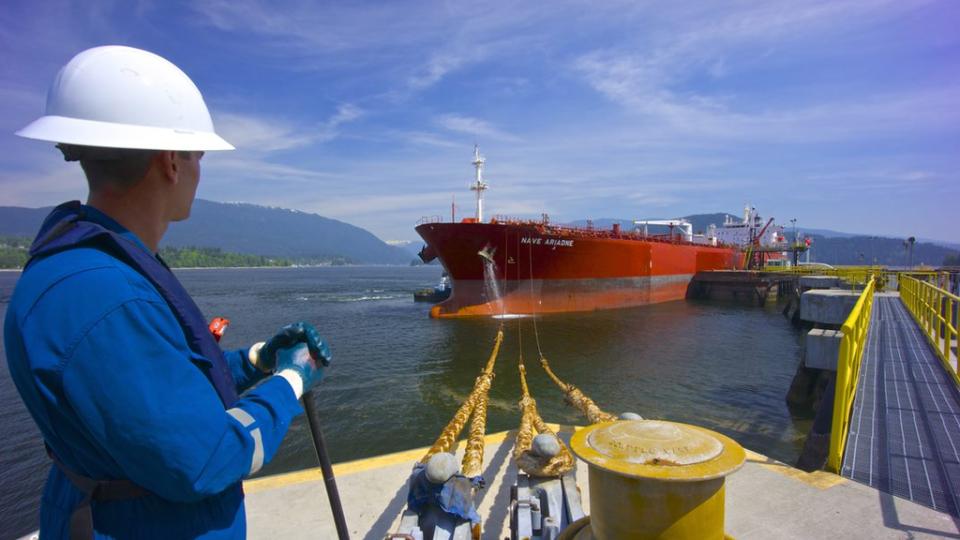
Tankers calling at the port’s Westridge Marine Terminal now have access to an expanded, reliable supply of oil from Alberta, thanks to the Trans Mountain pipeline.
Not only do these barrels have clear sailing to Asian ports, analysts say they’re just the type of oil Asian refiners are increasingly looking for.
About half the oil flowing through the pipeline is considered “heavy,” one of the grades most affected by the Strait of Hormuz closure, ATB said.
“Canadian heavy oil could become a premium global asset,” managing director of institutional equity research Patrick O’Rourke wrote on Mar. 2.

SAGD oil sands project in northern Alberta. Photo courtesy Cenovus Energy
Stability in a volatile market
It’s a sentiment that was building before the new conflict in the Middle East.
“Beyond price, Canada offers something increasingly valuable — a large, stable and reliable supply of heavy crude,” Studio.Energy director of research Carmen Velasquez wrote in November.
“At a time when geopolitical risk is reshaping energy trade flows…this reliability is becoming a strategic differentiator, not just a commercial one.”
Why heavy oil matters
Exported mainly from Alberta’s oil sands, heavy oil is one of Canada’s biggest energy assets.
Thick and gooey, it requires diluent for transportation and complex processing to produce gasoline, jet fuel and petrochemicals used in everyday items.
The large-scale petrochemical refineries in Asia that are driving oil demand growth can pair well with Alberta’s heavy oil, Velasquez said.
“In recent years, [China] has invested heavily in new mega-refineries and upgraded existing ones to handle heavier and more complex crude slates,” she said.
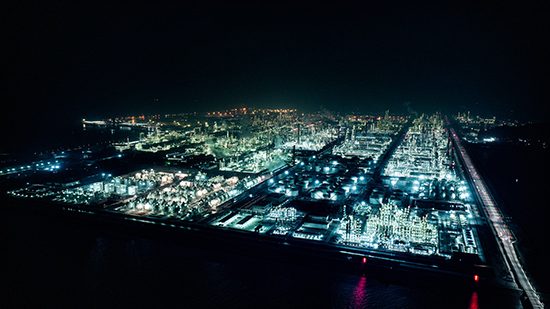
Zhejiang Petrochemical Complex in in Zhejiang, China. Photo courtesy Zhejiang Petroleum and Chemical Co.
Asia’s growing appetite
China is Asia’s “heavy oil hub,” RBC director of energy policy Shaz Merwat wrote in a November research note.
“China is sharply pivoting into petrochemicals, aiming to take Japanese and Korean market share,” Merwat said.
“India, too, is expected to see oil imports grow 1.5 million barrels per day by 2035 as both countries seek steady supplies of heavy and sour crude,” he said.
“Today, that supply originates from the Middle East, Russia and Venezuela, creating an opening for a stable, Western entrant.”
Canadian barrels gaining a foothold
Canadian heavy oil has started building a footprint in Asia thanks to the Trans Mountain expansion and “re-exports” — Western Canadian barrels shipped from terminals on the U.S. Gulf Coast.
Both China and India have purchased Canadian oil from Trans Mountain since the expanded pipeline went into service in May 2024, the company reports.
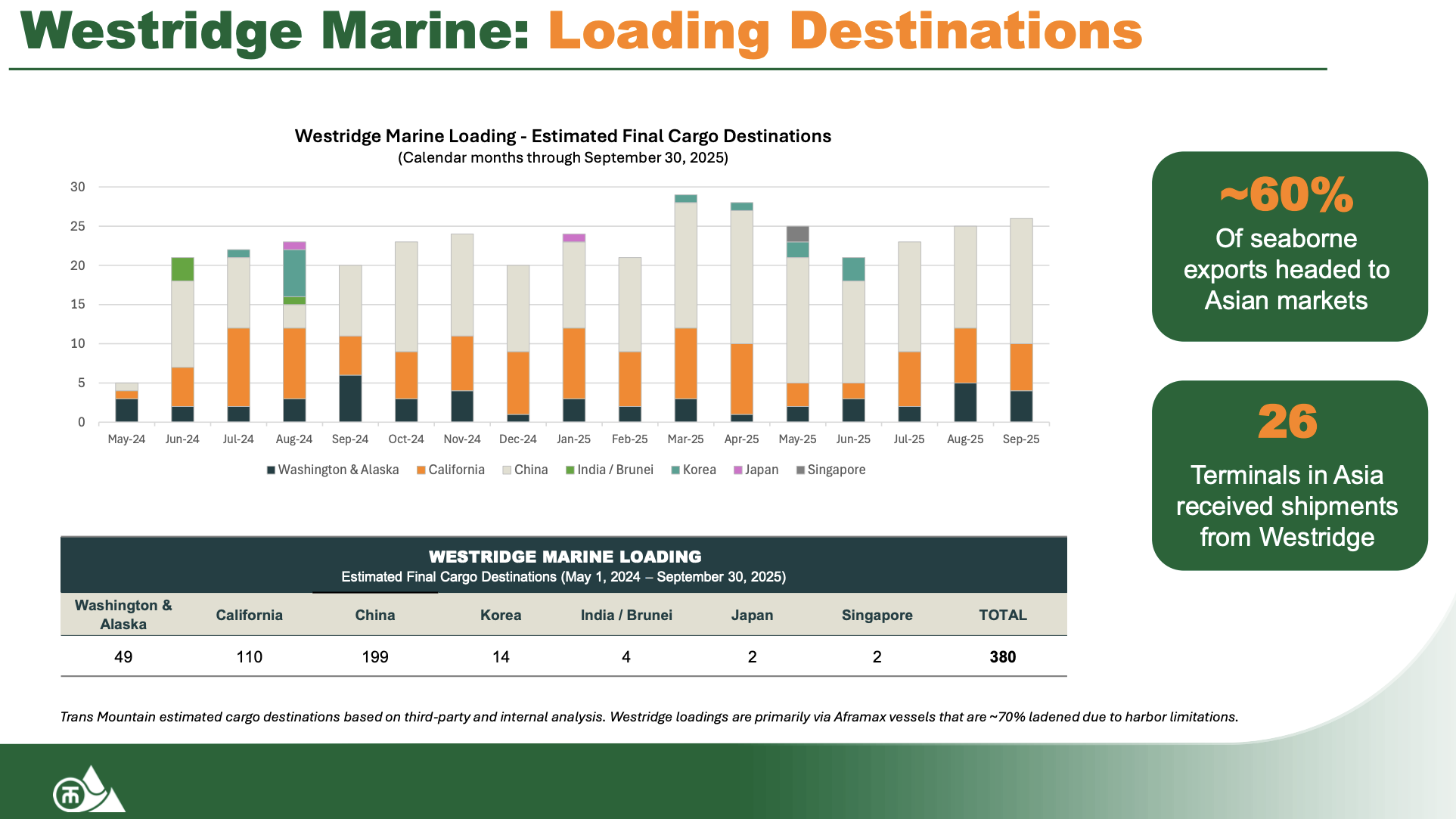
Courtesy Trans Mountain Corporation
While China leads overseas sales from Trans Mountain, India is a regular buyer of U.S. Gulf Coast re-exports, according to RBN Energy.
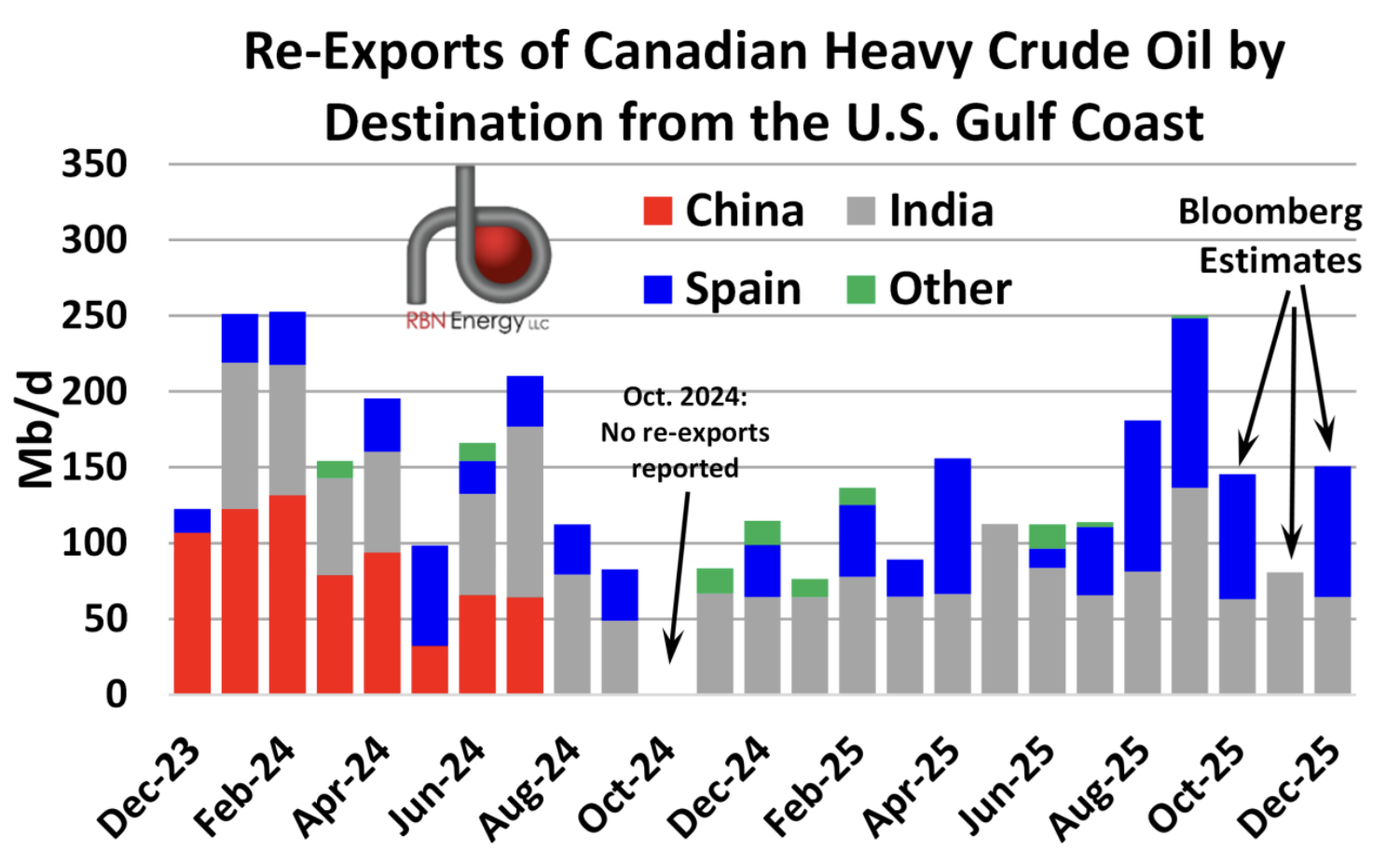
Courtesy RBN Energy
Demand keeps climbing
“Besides ongoing efforts to expand the Chinese customer base, India and Southeast Asia are the most promising growth markets for Canadian crude,” Studio.Energy’s Velasquez said.
“And this is no small opportunity.”
The International Energy Agency projects oil demand in the Asia-Pacific region will rise to 41 million barrels per day by 2050, up from 35 million barrels per day in 2024.
The unaltered reproduction of this content is free of charge with attribution to the Canadian Energy Centre.