Social




A new southern Alberta facility has produced its first battery-grade lithium carbonate, showcasing a technology that could unlock Canada’s largest resources of a critical mineral powering the evolving energy landscape.
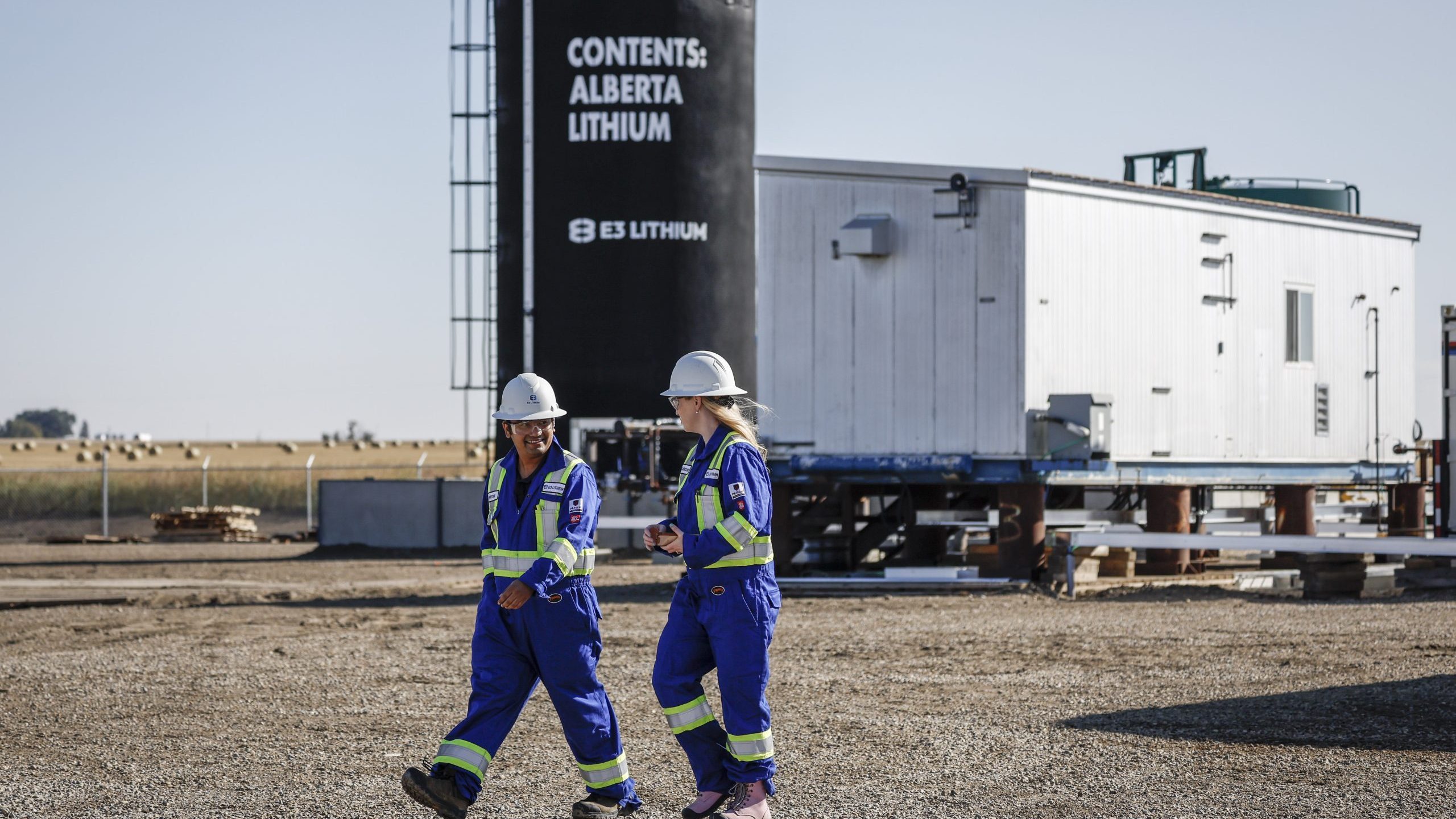
In an unassuming quonset hut in a field near Olds, Calgary-based E3 Lithium’s demonstration plant uses technology to extract lithium from an ocean of “brine water” that has sat under Alberta’s landscape along with oil and gas for millions of years.
Lithium is one of six critical minerals the Government of Canada has prioritized for their potential to spur economic growth and their necessity as inputs for important products.
“The use for lithium is now mainly in batteries,” said E3 Lithium CEO Chris Doornbos.
“Everything we use in our daily lives that has a battery is now lithium ion: computers, phones, scooters, cars, battery storage, power walls in your house.”
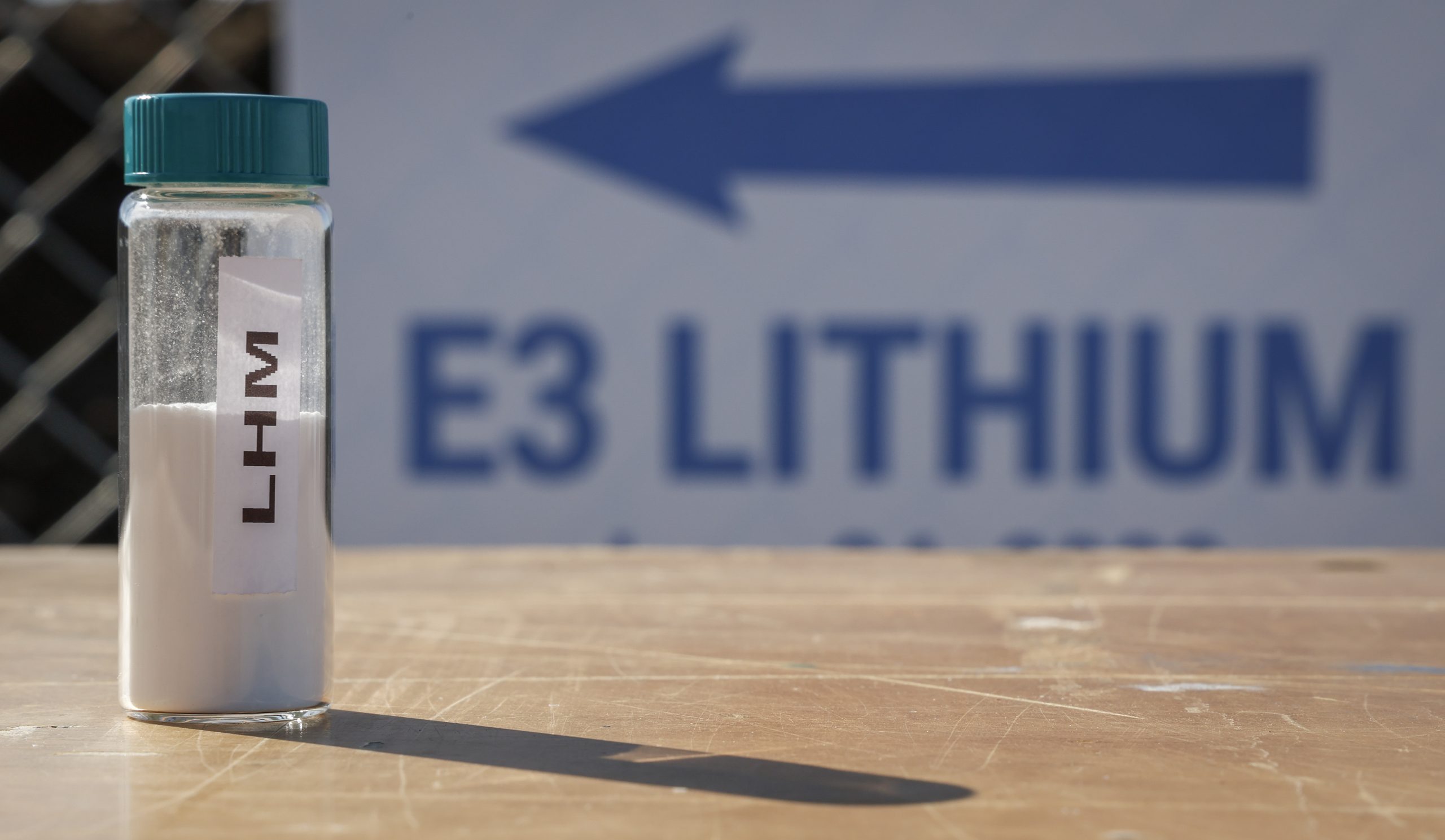
A vial of lithium at the E3 Lithium demonstration plant near Olds, Alta. CP Images photo
Doornbos sees E3 as a new frontier in energy and mineral exploration in Alberta, using a resource that has long been there, sharing the geologic space with oil and gas.
“[Historically], oil and water came out together, and they separated the oil from the water,” he said.
“We don’t have oil. We take the lithium out of the water and put the water back.”
Lithium adds to Canada’s natural resource strength — the country’s reserves rank sixth in the world, according to Natural Resources Canada.
About 40 per cent of these reserves are in Alberta’s Bashaw District, home to the historic Leduc oilfield, where E3 built its new demonstration facility.
“It’s all in our Devonian rocks,” Doonbos said. “The Devonian Stack is a carbonate reef complex that would have looked like the Great Barrier Reef 400 million years ago. That’s where the lithium is.”
Funded in part by the Government of Canada and the Government of Alberta via Alberta Innovates and Emissions Reduction Alberta (ERA), the project aims to demonstrate that the Alberta reserve of lithium can be extracted and commercialized for battery production around the world.
E3 announced it had produced battery-grade lithium carbonate just over two weeks after commissioning began in early September.
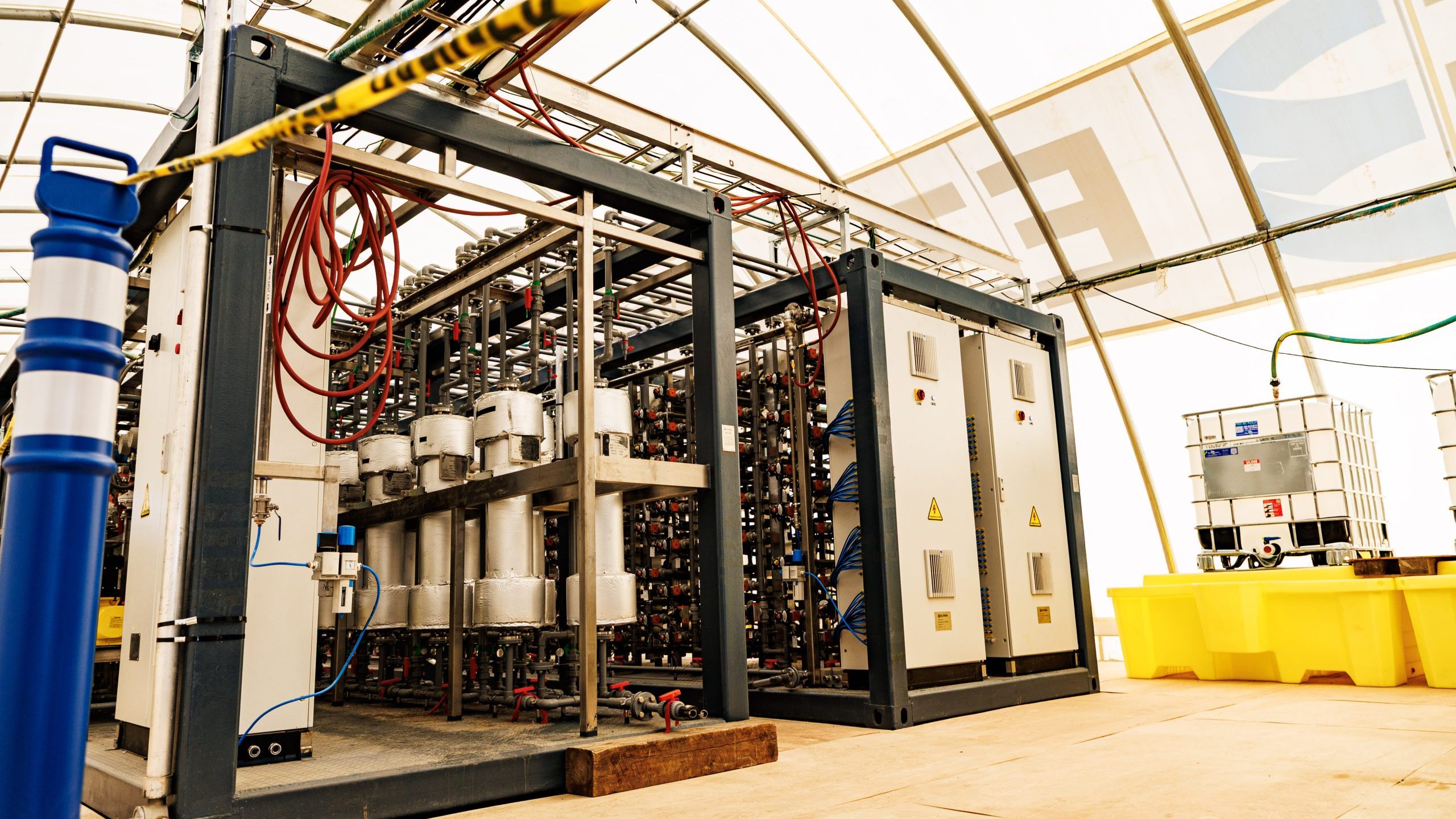
Inside E3 Lithium’s demonstration facility near Olds, Alta. Photo for the Canadian Energy Centre
In a statement, ERA celebrated the milestone of the opening of the facility as Alberta and Canada seek to find their place in the global race for more lithium as demand for the mineral increases.
“By supporting the first extraction facility in Olds, we’re helping reduce innovation risk, generate critical data, and pave the way for a commercial-scale lithium production right here in Alberta,” ERA said.
“The success from this significant project helps position Alberta as a global player in the critical minerals supply chain, driving the global electrification revolution with locally sourced lithium.”
With the first phase of the demonstration facility up and running, E3 has received regulatory permits to proceed with a second phase that involves drilling a production and injection well to confirm brine flow rates and reservoir characteristics. This will support designs for a full-scale commercial facility.
Lithium has been highlighted by the Alberta Energy Regulator (AER) as an emerging resource in the province.
The AER projects Alberta’s lithium output will grow from zero in 2024 to 12,300 tonnes by 2030 and nearly 15,000 tonnes by 2034. E3 believes it will beat these timeframes with the right access to project financing.
E3 has been able to leverage Alberta’s regulatory framework around the drilling of wells to expand into extraction of lithium brine.
“The regulator understands intimately what we are doing,” Doornbos said.
“They permit these types of wells and this type of operation every day. That’s a huge advantage to Alberta.”
The unaltered reproduction of this content is free of charge with attribution to the Canadian Energy Centre.