Social




The coming year could mark a turning point for the expansion of Canada’s oil and gas sector as governments look to harness its resources to drive economic independence and prosperity.
Against a backdrop of steady drilling activity and continued production growth, new major export projects are expected to take significant steps forward.
Here are five key developments to watch.
5. Modest growth in drilling activity
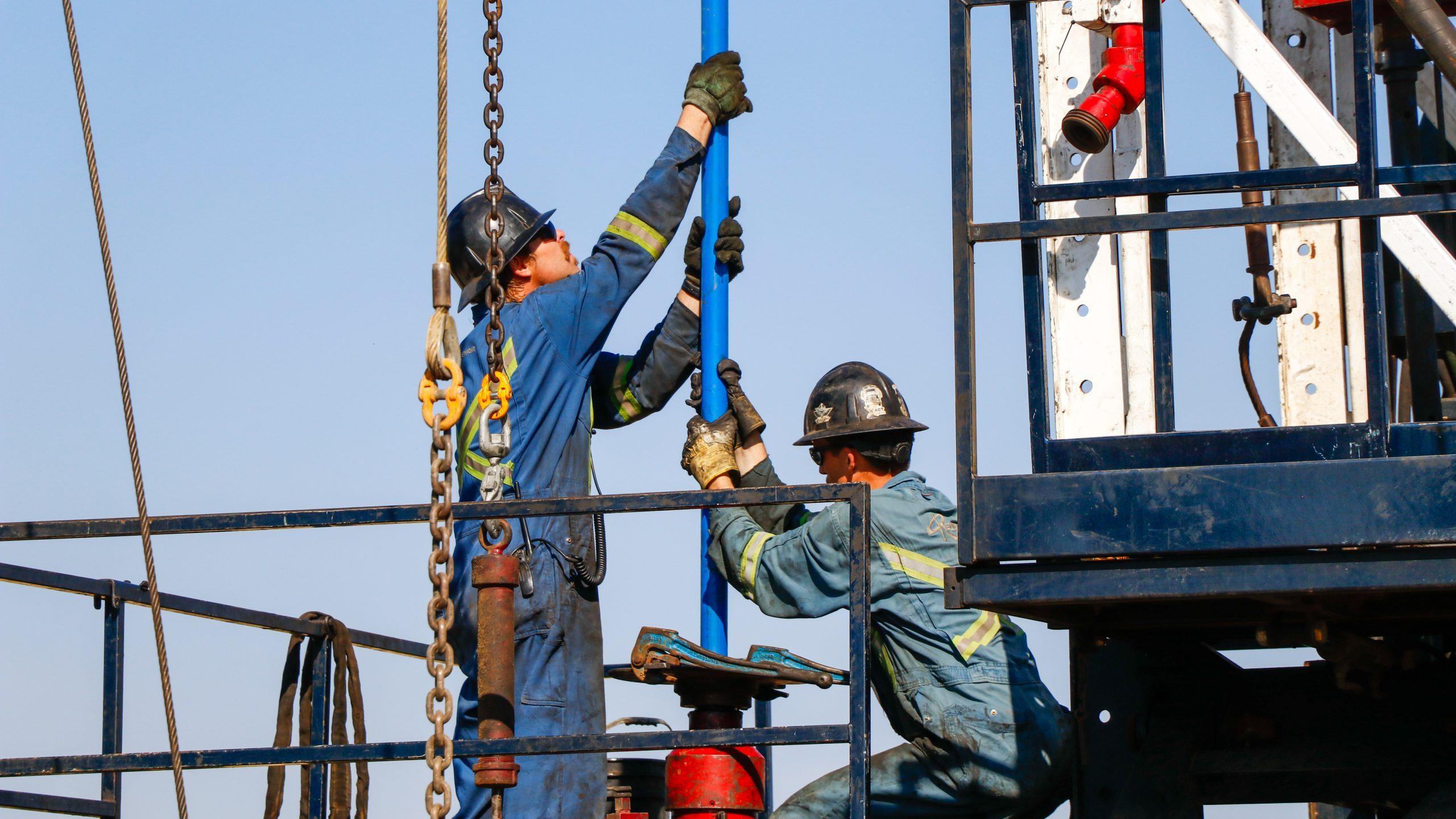
Oil and gas drilling in central Alberta, fall 2025. Photo supplied to the Canadian Energy Centre
Oil and gas drilling in Western Canada is set for modest increases in 2026 amid flat oil price forecasts and softer natural gas prices, according to the Canadian Association of Energy Contractors (CAOEC).
CAOEC projects an average of 213 active drilling rigs, up from 201 in 2025. A total of 5,709 wells are expected to be drilled, an increase of just under three per cent.
This will be accompanied by an average of 458 active service rigs, up from 447 in 2025.
The activity is expected to support 85,000 direct and indirect jobs over the year.
“These aren’t abstract figures; they’re the heartbeat of Canada, the proof that our work isn’t just about extracting resources — it’s about giving Canadians a hopeful future,” said CAOEC CEO Mark Scholz.
4. New investment spurred by Alberta-Canada agreement
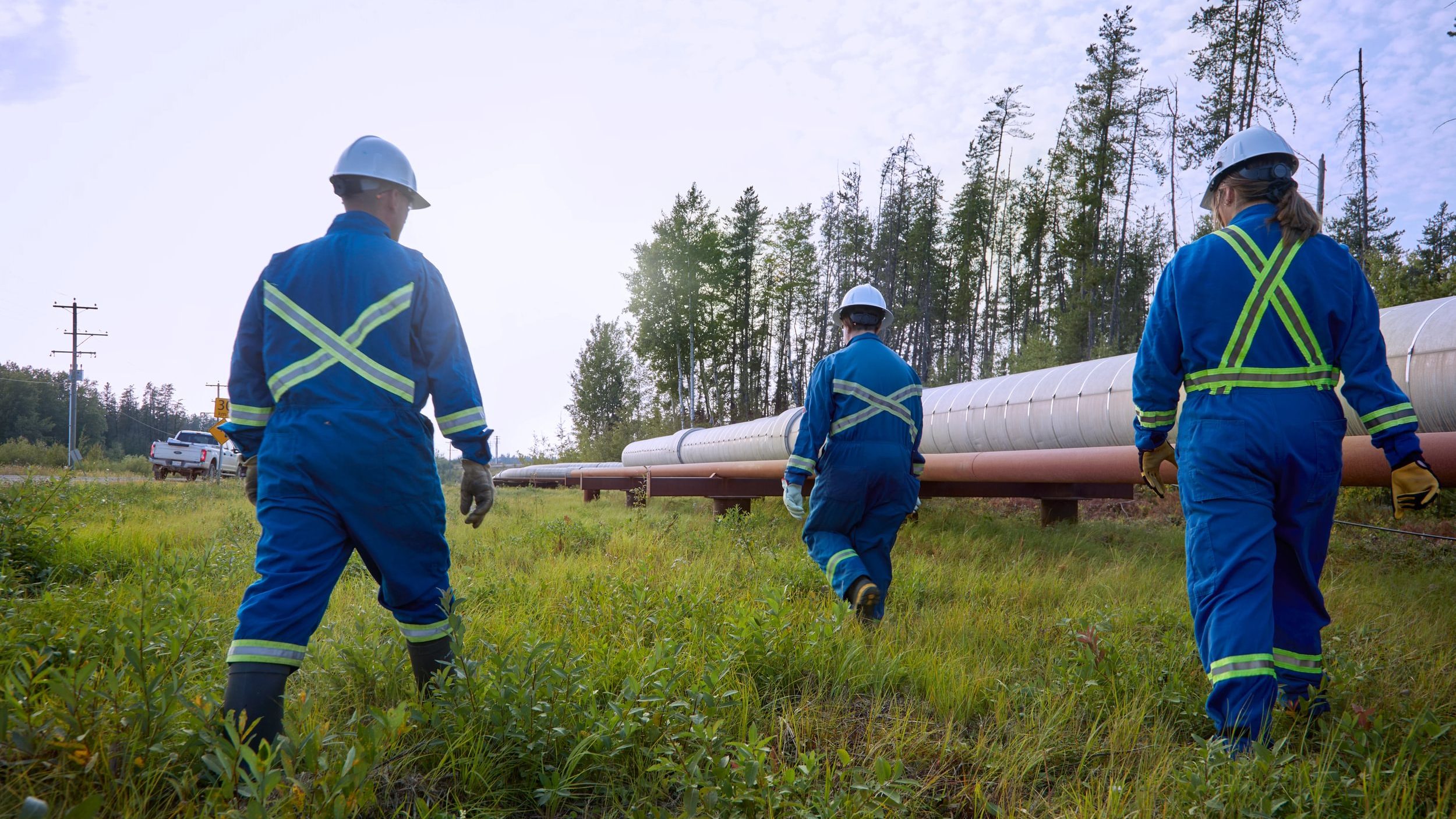
Oil sands workers in northern Alberta. Photo courtesy Pathways Alliance
The recent wide-ranging energy agreement between the Alberta and federal governments could unlock new investment in data centres, emissions-reduction technology and oil sands growth in 2026.
The deal is “formidable,” Edmonton-based Capital Power CEO Avik Dey told investors in December.
“It allows us a pathway to building new natural gas-fired power generation in Alberta,” he said.
The company announced it is now negotiating an electricity supply agreement with an unnamed data centre developer in the province.
Policy think tank Clean Prosperity estimates the $130-per-tonne carbon credit price agreed to by Alberta and Ottawa could unlock more than $90 billion in low-carbon investment including carbon capture and storage (CCS).
And as details of Alberta’s proposed pipeline to the northwest coast become clearer, oil sands producers could begin dusting off expansion plans.
According to BMO Capital Markets, producers have already submitted project proposals with combined capacity of 4.1 million barrels per day — enough to more than double current oil sands production.
This total includes both approved projects and proposals that are currently on hold or delayed.
3. Data centres taking flight

Alberta’s goal of attracting $100 billion in data centre investment is expected to advance in 2026 as key policy measures take shape and new projects receive approval.
Interest is strong, with proposed data centres now requesting more than 20 gigawatts of power, according to the Alberta Electric System Operator.
The province passed legislation in 2025 that encourages data centres to bring their own generation to support their connection to the power grid. This is designed to enhance reliability of the grid while accelerating the approval process for data centre projects.
In December, two European companies announced a $1.26 billion plan to build four new AI-ready data centres in Alberta.
Portugal-based Technologies New Energy will supply 80 per cent of the power for the new data centres for Data District Inc., a division of Swiss asset management firm Alcral AG.
“Alberta offers the energy resources, industrial base and investment momentum to support this growth,” TNE said in a statement.
Initial operations are targeted for 2026.
2. Go-ahead for Ksi Lisims LNG
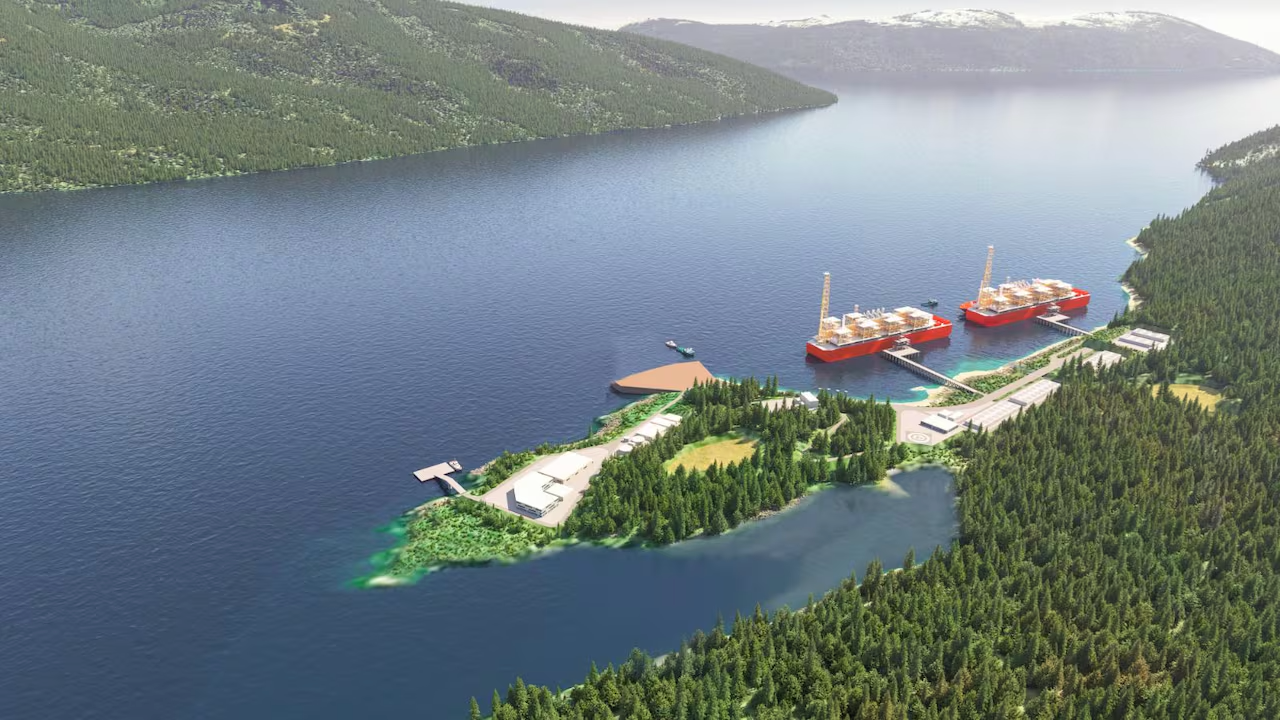
Rendering of the proposed Ksi Lisims LNG project. Image courtesy Ksi Lisims LNG
An Indigenous-led floating LNG terminal on B.C.’s northern coast near Alaska is “not far off” from a final decision to proceed.
That milestone is expected in 2026, spokeswoman Rebecca Scott said in November.
Ksi Lisims (pronounced “s’lisims”) is a partnership between the Nisga’a Nation, a consortium of Canadian natural gas producers called Rockies LNG, and a subsidiary of Houston-based Western LNG.
The 12-million-tonne-per-year project would help significantly expand Canada’s LNG export capacity, which is currently about 14 million tonnes per year.
In November, Ksi Lisims was referred for fast-tracking by Canada’s new Major Projects Office (MPO).
Start-up is targeted for 2029.
1. Advancing a new northwest coast oil pipeline
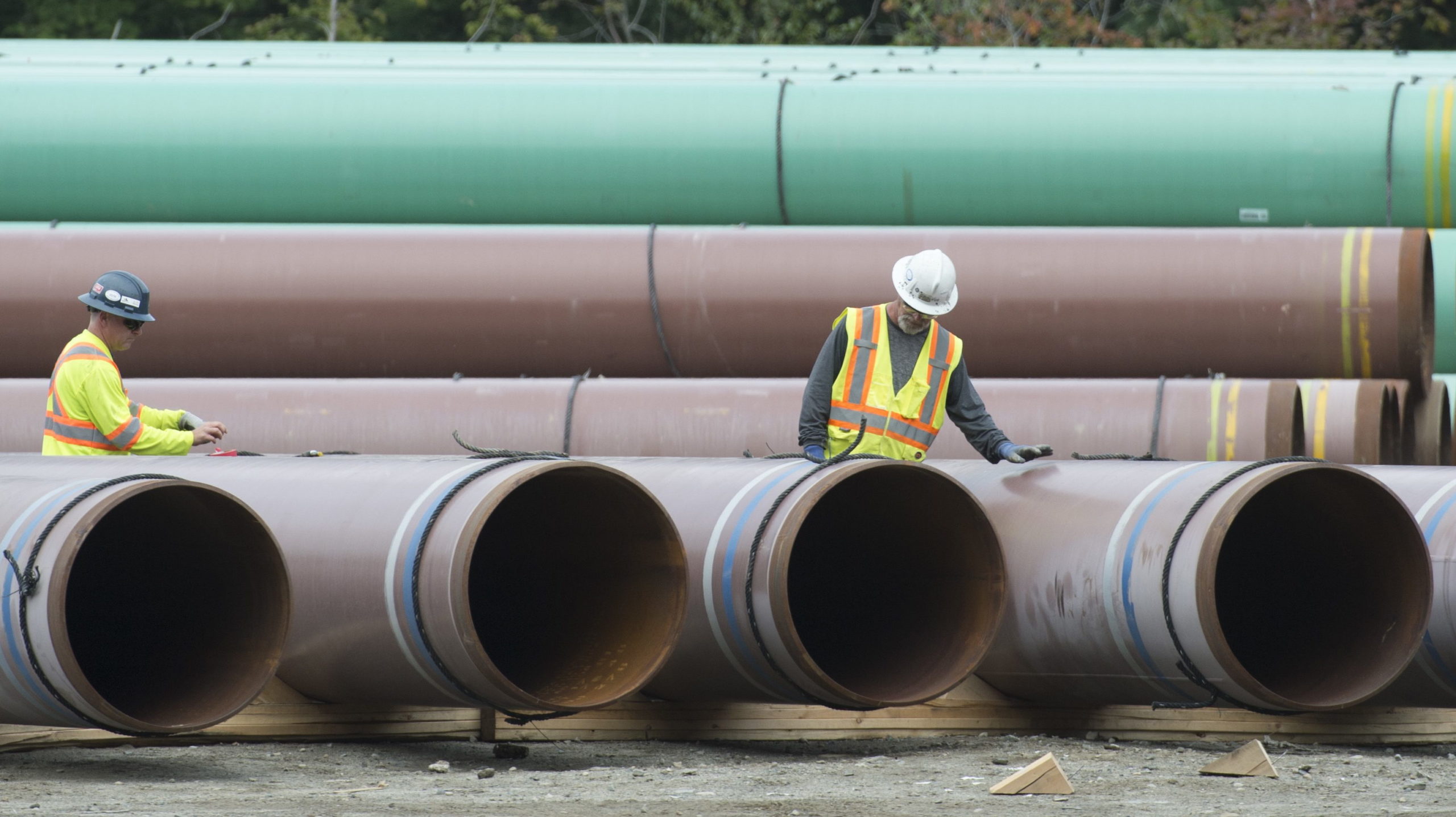
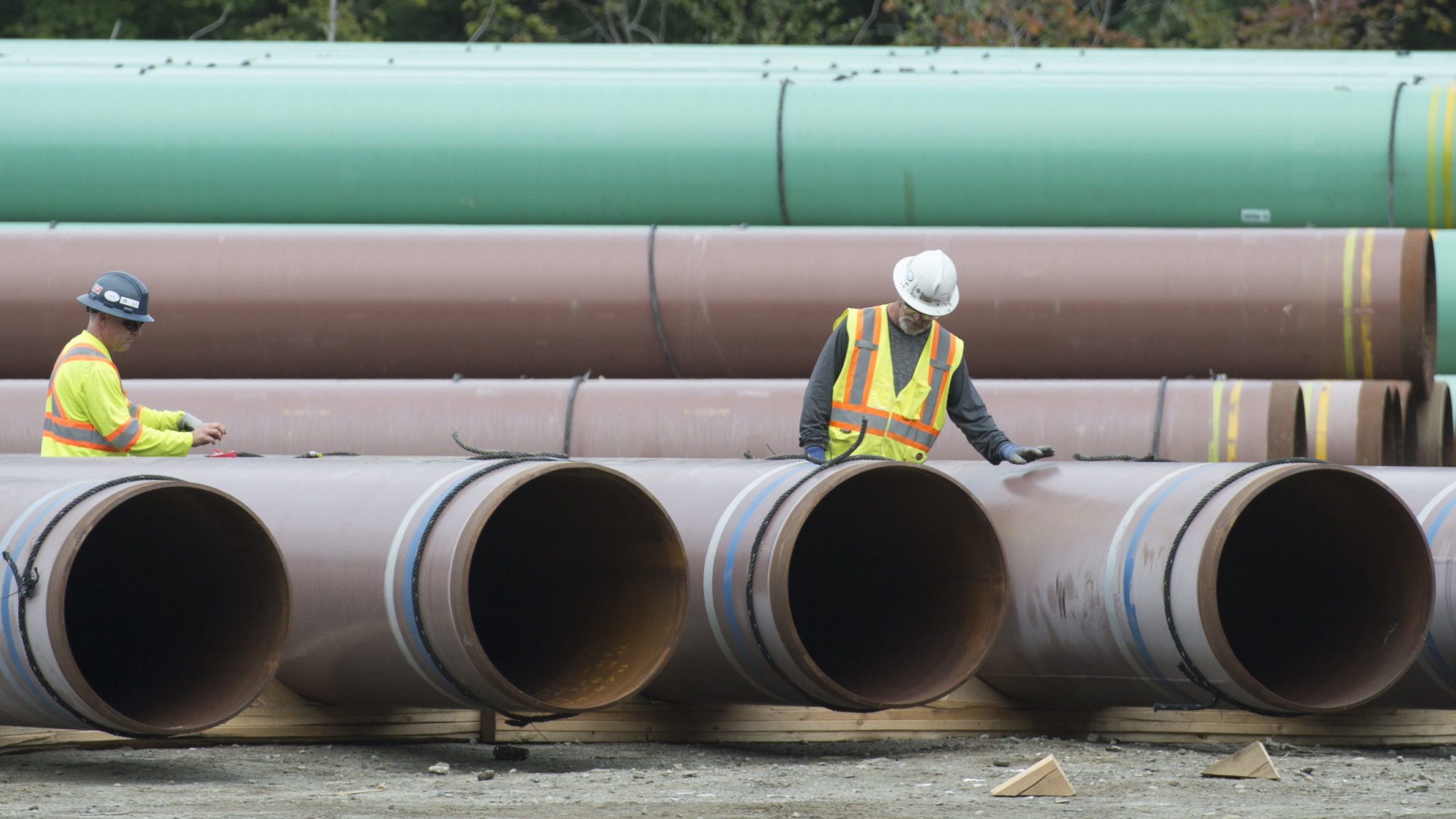
Pipe in storage for the Trans Mountain expansion near Hope, B.C. in August 2019. CP Images photo
Alberta’s application to the MPO for a new oil pipeline to the northwest coast is expected by July 1, 2026.
It’s a project that’s been designated in the national interest as a key measure to establish Canada as an energy superpower.
The pipeline application is expected to target a deep-water port for oil exports to Asian markets, while creating opportunities for Indigenous ownership.
If a proposal is approved, the federal government has committed to enabling bitumen exports, including an “appropriate adjustment” of the tanker moratorium on B.C.’s north coast if necessary.
The governments have also agreed to a maximum two-year timeframe for permitting and approvals.
The unaltered reproduction of this content is free of charge with attribution to the Canadian Energy Centre.