Social




As the world moves to secure lithium for electric vehicles and other power-hungry products, Alberta is advancing an approach that could offer both environmental and strategic advantages.
A new assessment of Alberta’s lithium resources confirms the enormous scale of the province’s potential.
A new approach to lithium production
Rather than relying on sprawling solar evaporation ponds or energy-intensive hard-rock mining operations, Alberta is pursuing lithium production centred on direct lithium extraction (DLE) from deep underground deposits.
Using technology adapted from decades of oil and gas experience, DLE uses solvents to selectively remove lithium from salty formation water before reinjecting the spent brine back underground, significantly reducing land disturbance and water loss.
Work underway in the province is showing the feasibility of lithium production from DLE.
“We have a great resource base, and our oil and gas industry has set us up to pursue a more environmentally friendly way of producing lithium,” said Kim Mohler, vice-president of project development for energy consulting firm GLJ Ltd.
Much of Mohler’s time is spent supporting clients’ lithium and geothermal projects across Canada and the U.S., including key DLE developments underway in Alberta.
“Alberta has an advantage because a lot of the knowledge and infrastructure for drilling wells and producing deep subsurface brines is already in place,” she said.
The province is also a step ahead because the exploration work that has to be done in other parts of the world has already been done here, Mohler added.
One of the world’s largest lithium resources
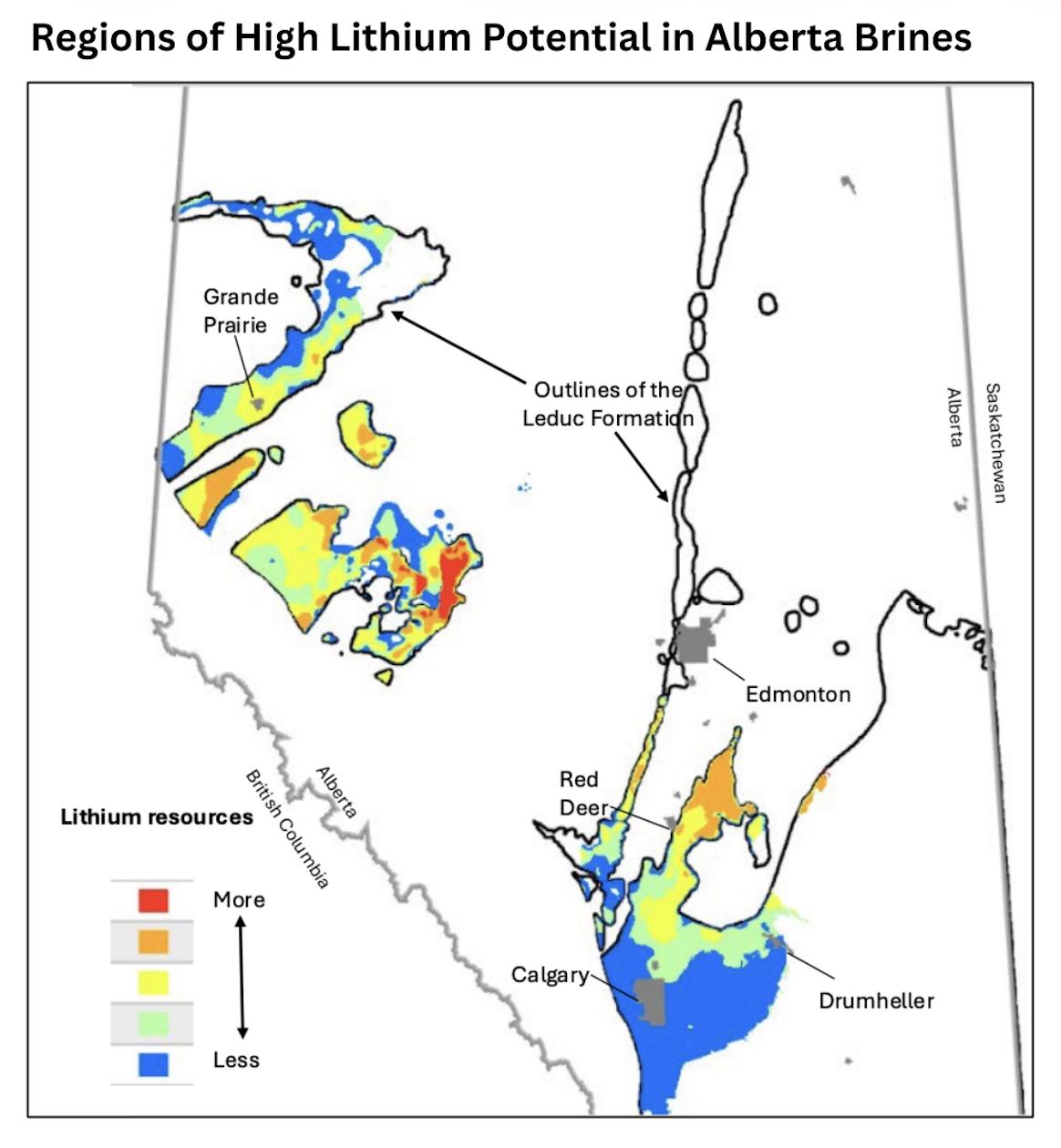
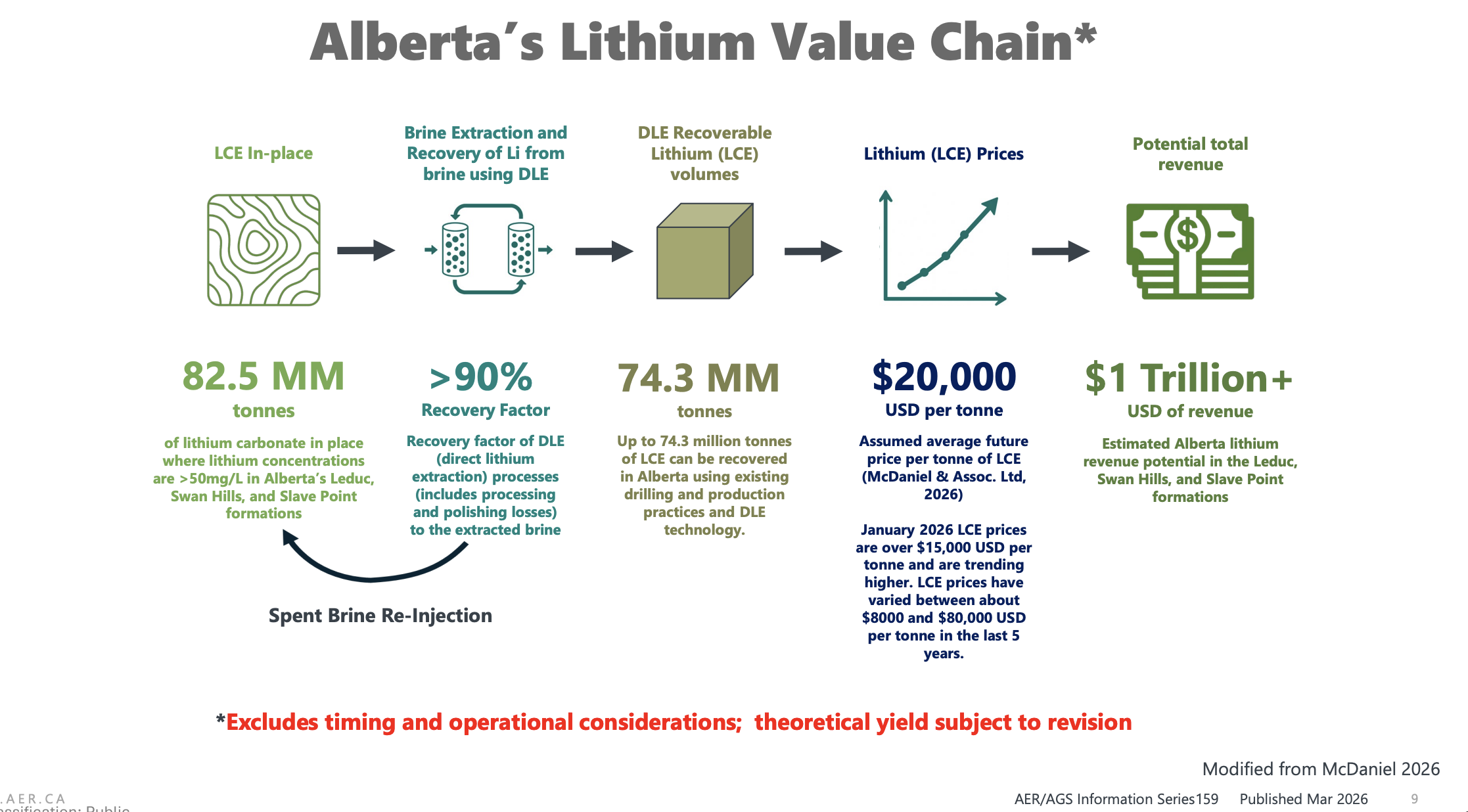
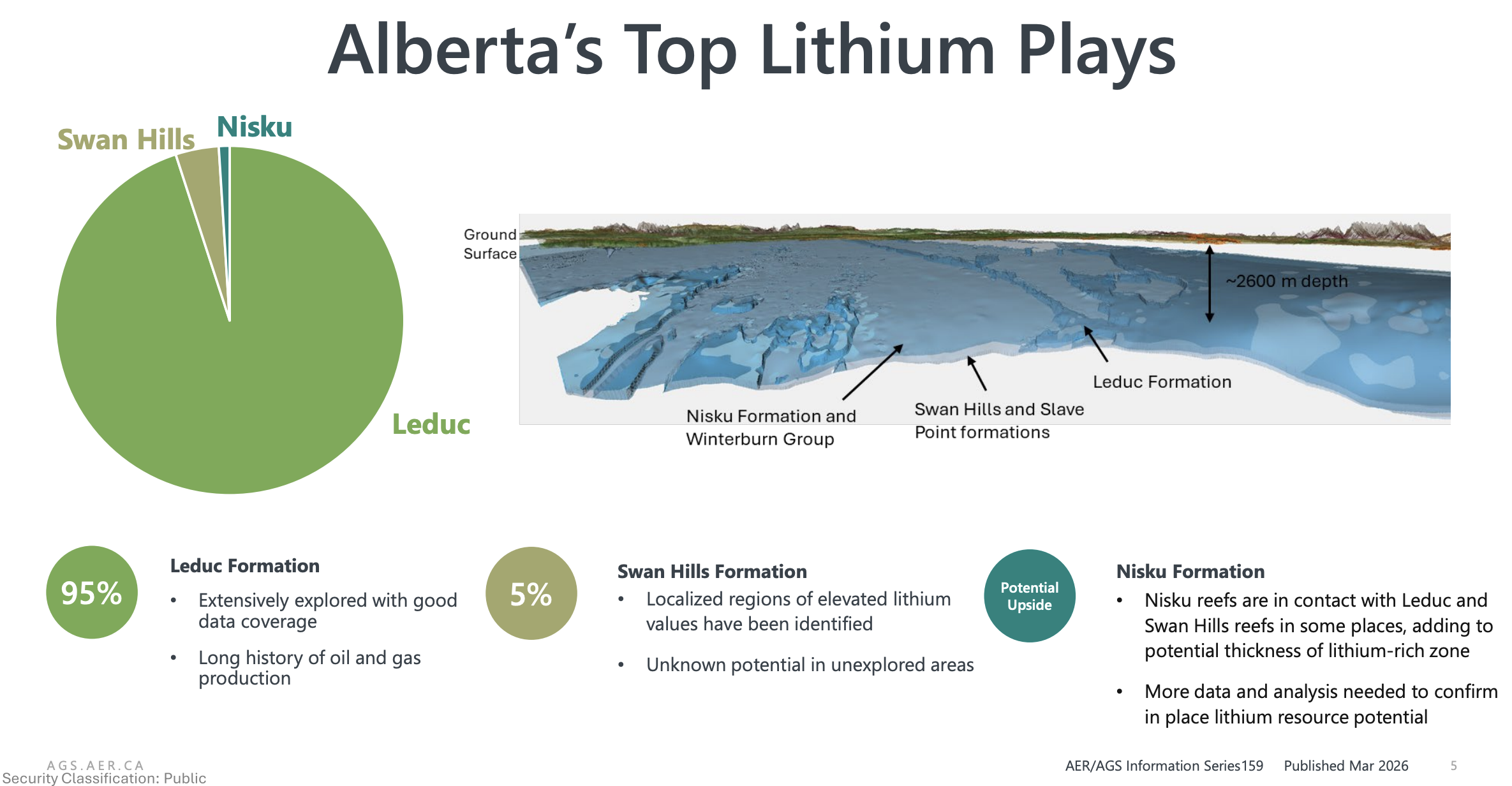
According to a new report by the Alberta Geological Survey and Alberta Energy Regulator, the province’s subsurface contains an estimated 82.5 million tonnes of lithium carbonate equivalent, one of the largest known accumulations in the world.
Most of the resource is concentrated in the Devonian-age Leduc formation, the same geologic formation that launched the province’s modern oil industry in 1947.
Significant additional resources are also found in the Swan Hills and Nisku formations.
Source: Alberta Geological Survey/Alberta Energy Regulator
The new report outlines the enormous scale of the lithium industry’s opportunity.
Alberta’s lithium resources could supply material for more than 10 billion electric vehicle battery packs and could theoretically generate more than US$1 trillion in revenue over time, the analysis found.
Rising demand, limited North American supply
North American lithium demand is projected to grow sharply over the next several years.
According to S&P Global, U.S. consumption is forecast to increase by roughly 74 per cent annually while Canadian demand grows by about 40 per cent by the end of the decade.
Right now the vast majority of the world’s lithium supply comes from outside of North America, which produced just 40,000 tonnes of lithium carbonate out of a global supply of 1.28 million tonnes in 2024.
Canada accounted for approximately 2.5 per cent of that, at 5,983 tonnes, according to the Canada Energy Regulator.
Alberta emerging as a new lithium player
As global demand for lithium accelerates, driven by rapid growth in electric vehicles and battery storage, Alberta is emerging as a new player in a market long dominated by countries such as Chile, Argentina and Australia.
Approximately two million hectares have already been leased for lithium exploration in Alberta, and the province is a hot spot in the nascent DLE industry.
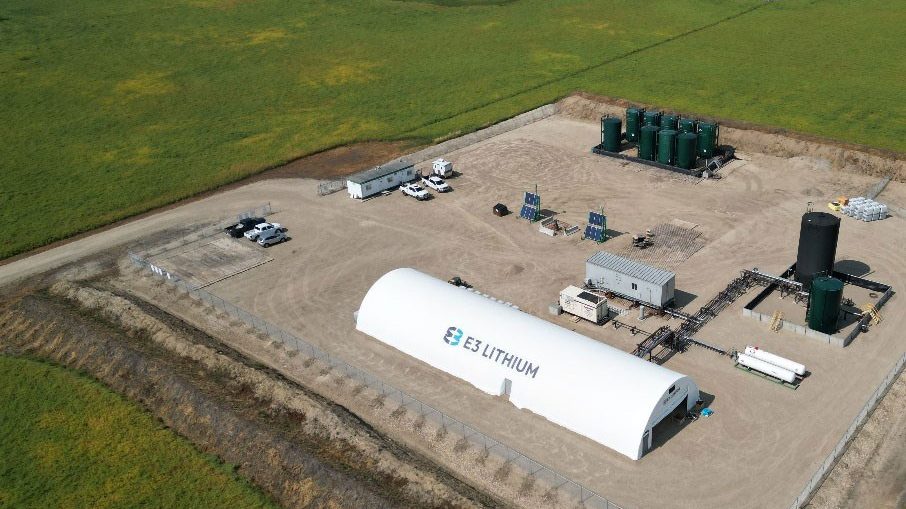
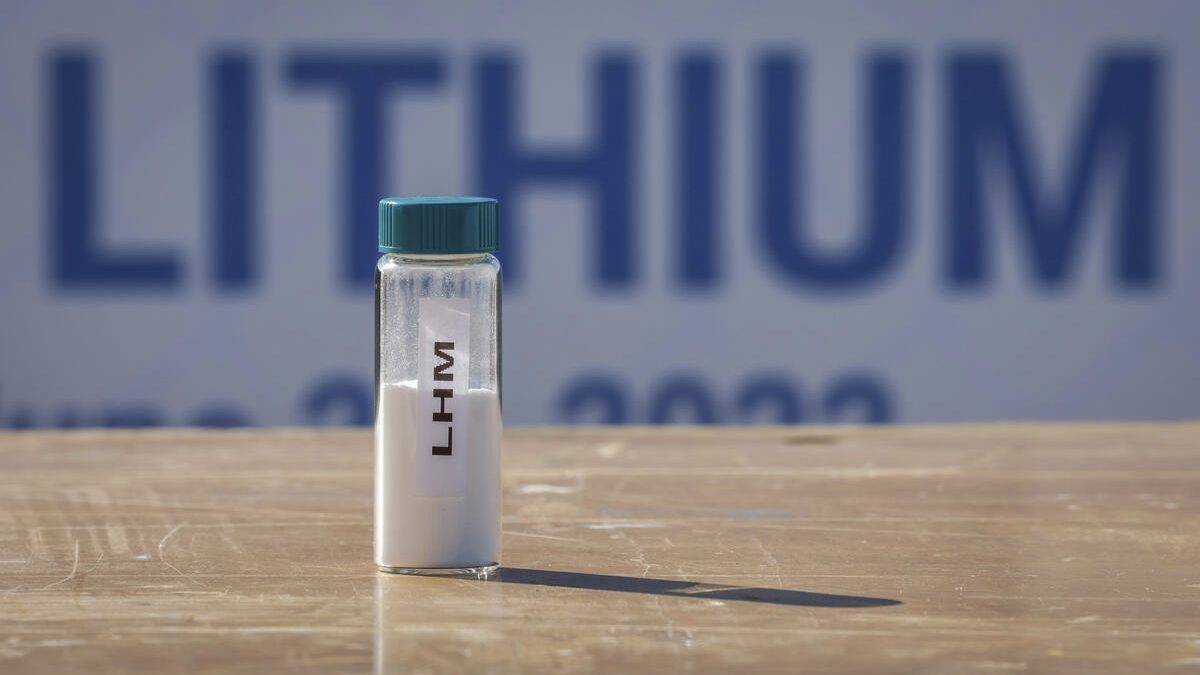
The E3 Lithium pilot plant near Olds, Alta., September 2023. CP Images photo
E3 Lithium is the province’s most advanced lithium developer.
The Calgary-based company produced Alberta’s first battery-grade lithium carbonate at its demonstration facility near Olds in 2025.
The milestone marked a major step toward commercial production and validated the technical feasibility of extracting lithium from Alberta brines.
Path to commercialization
E3’s project leverages Alberta-based DLE technology and existing oilfield infrastructure, and the company is working toward commercial-scale production later this decade.
“Nobody has proven they can do DLE production at commercial scale yet,” Mohler said.
“The potential for Alberta to be among the first is very good if they can make the economics work, and I think following the oil and gas industry’s value chain of having companies specialize in upstream production, transportation, processing and refining will likely be a good business strategy.”
The unaltered reproduction of this content is free of charge with attribution to the Canadian Energy Centre.